

If patients are admitted to the wrong ward in hospital, the mortality rate more than doubles
A study involving 37 internal medicine departments has highlighted the risks for patients ‘parked’ in other beds

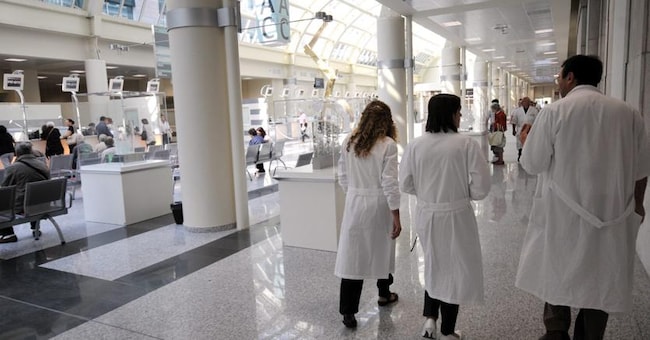
‘Not all beds are the same’: admitting a patient to the wrong ward can prove fatal, more than doubling the risk of mortality. Admitting a patient to the first available bed, rather than to the ward best suited to their clinical condition, is not merely an organisational issue but can have a direct impact on the safety of care and clinical outcomes. This is the finding of the all-Italian “SISIFO” study, sponsored by Fadoi – the Federation of Hospital-Based Internists – and recently published in the Journal of Patient Safety: it is the first Italian prospective study dedicated to the phenomenon of “out-of-ward” admissions, the flip side of hospital overcrowding, less well-known than ‘boarding’ in A&E departments but nonetheless just as critical.
The study involved 37 Internal Medicine departments across the country and enrolled 2,056 patients. The analysis revealed results that were surprising to say the least, prompting reflection on the fact that so-called ‘appropriateness’ is not an optional extra, but a strategic choice. According to the study, in fact, in-hospital mortality among patients admitted for at least one night to an inappropriate ward was more than double that of patients admitted directly to Internal Medicine (9.5 per cent versus 4.4 per cent). Not only that: patients admitted to the wrong ward experienced a higher frequency of multiple adverse events during their stay, including falls, delirium, medication errors and other care-related complications. The study analysed the care pathways of medical patients who, despite requiring admission to the Department of Internal Medicine, are temporarily placed in other wards due to a lack of beds. These are predominantly elderly, frail patients suffering from multiple concurrent conditions and with complex care needs.
In short, hospitalisation outside a specialist ward is not a painless solution: “These findings confirm what internists observe on a daily basis in our hospitals: not all beds are created equal,” emphasises President Fadoi, Andrea Montagnani . “For a complex patient,” he points out, “it is not enough simply to be admitted. What matters is where they are admitted, who is looking after them, the continuity of care provided, and the level of expertise available.” According to the Federation, admitting internal medicine patients to wards not designed to manage high levels of complexity can compromise clinical monitoring, continuity of care, communication between teams and the timeliness of interventions.
The study is not intended to cause alarm, but draws attention to a phenomenon that is becoming increasingly common in Italian hospitals, particularly during periods of heightened pressure on A&E departments, such as the summer. Overcrowding, a reduction in the number of beds and the insufficient development of community care ultimately have an impact on hospital organisation and, in particular, on internal medicine wards. ‘A patient outside the ward is often the clearest sign of a system under strain,’ observes the president of the Fadoi Foundation, Francesco Dentali. ‘When there are no beds available,’ he emphasises, ‘an immediate solution is sought. But this solution cannot become the norm, because it risks exposing the most vulnerable patients to less safe care pathways.” Finally, according to Micaela La Regina, Clinical Governance and Risk Management Unit, ASL5, La Spezia, “it is necessary to rethink the management and allocation of beds, strengthen staffing levels and expertise in the management of acute patients, and invest in more modern and resilient organisational models”. This has led to a number of priorities and proposals put forward by Fadoi: from increasing the number of beds in Internal Medicine to strengthening medical and nursing staff; from establishing dedicated care pathways for patients temporarily admitted outside their usual wards to training staff in the host wards to manage complex patients, right through to managing patient flows from A&E and integration with local services.
© ALL RIGHTS RESERVED


