

If the Michelin-starred Niko Romito enters the kitchen: a breakthrough in school canteens in Abruzzo
Advanced technologies such as vacuum cooking, controlled steam and brine for vegetables to enhance the organoleptic and nutritional profile of food: the regional '#iomangioascuola' project is ready to start, thanks to which the local health authorities will integrate research and innovative techniques at the heart of the protocol devised by the chef

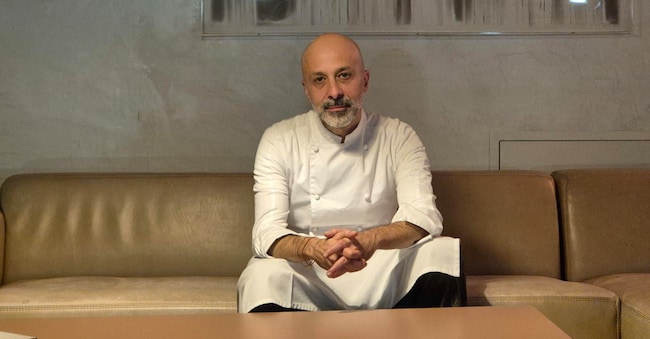
Can school food be tasty, as well as quality? In Abruzzo, yes, because haute cuisine enters the canteens thanks to a starred chef who makes half the world envious. The revolution in collective catering bears the signature of Niko Romito, holder for years of the fateful 3 Michelin stars, which have brought him to the Olympus of contemporary Italian cuisine, thanks to a style made up of study, careful and passionate research of raw materials and lots of technique.
The project
That figure, which smacks of purity, of territory, of authenticity, now becomes a shared heritage, made available to the community thanks to the '#iomangioascuola' project, desired and supported by the Region to rewrite the paradigm of regional school catering, in synergy with the Niko Romito Academy, the four local health authorities and the Regional Committee of Abruzzo Universities C.C.R.U.A.
Gastronomic research combined with scientific research and training: these are the strong points of a project that President Marco Marsilio pins on Abruzzo's chest like a medal, because it changes the narrative of starred cuisine, which, while remaining faithful to its own high segment, generously offers itself to the community to light up dishes and preparations intended for public catering with flavour.
The 'Romito method'
The 'Romito method' can land in canteens and stimulate children's appetites thanks to regional law no. 22 passed in 2021, which established a regulatory framework for improving collective and school catering in Abruzzo, with a focus on sustainability, food quality and innovation in meal preparation and distribution techniques.
It has taken a while, of course, to bring into reality and integrate into the ASL guidelines the research and innovative techniques that are at the heart of the Niko Romito Method, a protocol that uses advanced technologies such as vacuum cooking, controlled steam and brine for vegetables to raise the organoleptic and nutritional profile of food. Not forgetting the possibility of optimising preparation logistics and sustainability. Soft cooking in fact reduces food weight loss, while waste recovery and standardisation of processes allow high quality to be offered while respecting the budget of traditional catering.
The Universities of Chieti, L'Aquila and Teramo played a central role in the evaluation of the nutritional value, anti-inflammatory properties and glycaemic index of dishes, since in the public catering sector, which plays a fundamental role in the health of the population, it is necessary to test innovative methodologies in the preparation of meals that preserve nutritional quality and reduce their metabolic impact.

