
World Day

If diabetes rhymes with inequality: Italy's jagged access to care

Economic poverty and waiting lists hinder access to the SSN with rates significantly higher than the already high rates recorded in the general population, while there are areas of the country where only 30% of patients receive regular specialist care

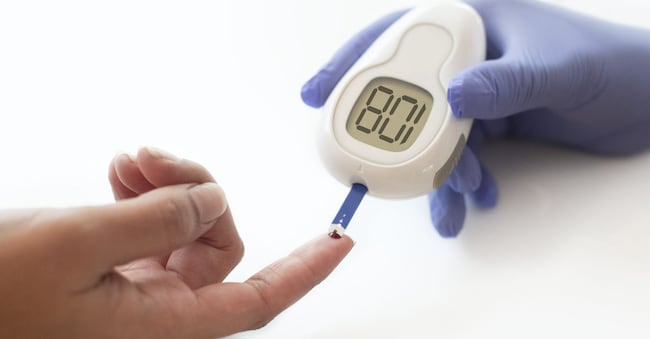
Medico che utilizza un glucometro per rilevare la glicemia di un paziente. (Science Photo Library / AGF)

5' min read

Translated by AI
Versione italiana

5' min read

Translated by AI
Versione italiana

A silent pandemic spreading throughout the world and in Italy, but against which prevention and correct lifestyles, combined with early diagnosis and increasingly 'patient-friendly' therapies and technologies, can make all the difference. Just as targeted health policies and actions to combat territorial and social inequalities, which heavily influence both the onset and evolution of the disease, are needed.

We are talking about diabetes, the paradigmatic disease of all chronic diseases, which can lead to serious complications affecting the cardiovascular system, kidneys, eyes, nerves and brain. And which, as health institutions remind us on World Diabetes Day on 14 November, although its prevalence increases with age, is also gaining ground among the younger population.

Loading...

L’identikit

The pathology has a double declination: diabetes 'type 1' is an autoimmune disease that mainly affects children and young adults, and on this front Italy has been a pioneer in the world, unanimously approving in Parliament the law (130/2023) that introduced national screening for the early detection of this form of diabetes (as well as of coeliac disease); type 2 diabetes mellitus', also known as 'adult diabetes', affects over 90% of cases in Italy and particularly affects the most vulnerable, starting with the elderly and people with metabolic syndrome or obesity. The latter disease, which our country - marking another first - has classified as 'chronic' since 1 October 2025.

Risk factors

It is precisely the condition of obesity that is one of the main risk factors, so much so that the term 'diabesity' has been coined, but elements closely related to lifestyles, such as sedentary lifestyles, also influence the onset of the disease. It is the National Institute of Statistics (ISTAT) that paints the picture: the prevalence of diabetes is higher among those who do not exercise, at 12.5 per cent compared to 7.7 per cent among those over 45 years of age who lead a more active life; while among individuals with obesity, the prevalence is 17.4 per cent compared to 9 per cent among the over-45s who are not obese. In the case of co-presence of obesity and sedentary lifestyle, the share of people with diabetes reaches 21.8 per cent. Trends that are growing among older men and women.

The numbers

In the world, diabetes affects about 537 million people, with data growing alarmingly so that it will reach 643 million in 2030 and 738 million in 2045. In Italy, almost 4 million individuals are affected, equal to 6.6% of the population, with another million estimated to be unaware of having the disease. And even in Italy the trend shows an increase since the beginning of the 2000s that, net of the ageing factor, is equal to +27% with a higher percentage among males and a higher prevalence in the South. The distribution of the disease is growing strongly by age, so much so that it reaches a prevalence of 15.5% in the 65-74 age group and exceeds 20% among the over-85s. In recent years, however, diabetes has already started to appear among young adults, triggering an 'alert' on prevention and healthy lifestyles.

The Sustainability Challenge

Diabetes is first and foremost a great sociomedical challenge, but at the same time it poses a huge sustainability issue for public health: the average annual cost per sick person in Italy is 2,800 euro, while the direct cost of the disease alone is estimated at 9 billion a year, to which are to be added the damages from absence from work, loss of productivity, impact on caregivers and families in general, so that a burden of 14 billion a year is estimated.

Region you go, diabetes you find

In 2023, the last year available, the prevalence of the disease in the middle age bracket of the population registers a 6 percentage point range in the country: it goes from a minimum of 2 per cent in Trento to 8 per cent in Molise, and the values for Emilia-Romagna (6.4 per cent), Umbria (6.9 per cent), Sardinia (7 per cent) and Sicily (6.2 per cent) are also critical. Among the elderly population the differences become even sharper, to the disadvantage of the southern regions where - except for Abruzzo and Sardinia - the prevalence exceeds 20 per cent.

The scourge of waiting lists

Therefore, Italians with diabetes are not all 'the same' from North to South Italy: it is first and foremost the waiting lists that have a particular impact on people with more than one chronic disease that have an impact. In particular, for diabetic patients with more than one correlated disease (multimorbidity), accessibility to health examinations and services varies markedly from one area of the country to another, reflecting the reality of a national health service that is extremely fragmented in its responses. And above all for the 45-64 age group, the renunciation of treatment is highest both for economic reasons (11.2%) and because of the presence of long waiting lists (7.4%), with percentages clearly higher than those already high recorded in the general population.

Quality of Life

Only 36.5 per cent of people with diabetes over 45 and with multiple chronic diseases declare themselves satisfied with their lives overall, compared to 44.6 per cent of the general average for Italians: this is because the burden of disease profoundly marks existence. The fact that individuals with diabetes are more exposed to the risk of developing other diseases also has a major impact: for example, hypertension among diabetics has a prevalence that is more than double, at 56.3%. And the inequality of access to services weighs like a boulder: there are areas of Italy where barely 30% receive regular specialist care. The consequence is that the satisfaction rates of people with diabetes with multimorbidity are highest among men living in the North and lowest for women living in the South, also highlighting a 'gender malaise' associated with this pathology.

Living Well with Diabetes

Living well with diabetes is ultimately possible, provided that everyone - including the elderly and those with low educational qualifications who live in the South - is guaranteed the same access to prevention, diagnostic and therapeutic pathways and medical devices, as well as to treatment. Answers that have multiplied in recent years: from sensors to pumps to innovative drugs, even if still with limited access. Lastly, there is the great challenge of a more effective and efficient management of the disease through the reorganisation of territorial care in community homes, which is still being defined and where an integrated multi-chronicity care with the support of telemedicine should be implemented, to be flanked by the training of operators and patients in the use of new technologies and digital therapies.

Copyright reserved ©
Loading...

Brand connect

Loading...

Newsletter

Notizie e approfondimenti sugli avvenimenti politici, economici e finanziari.

Iscriviti