

If the heart stops the tumour: how the heartbeat slows the proliferation of 'bad' cells
The physical forces generated by the heart muscle can hinder tumour growth in the tissue: in Science the study coordinated by the University of Trieste in collaboration with the International Centre for Genetic Engineering and Biotechnology and Irccs Monzino

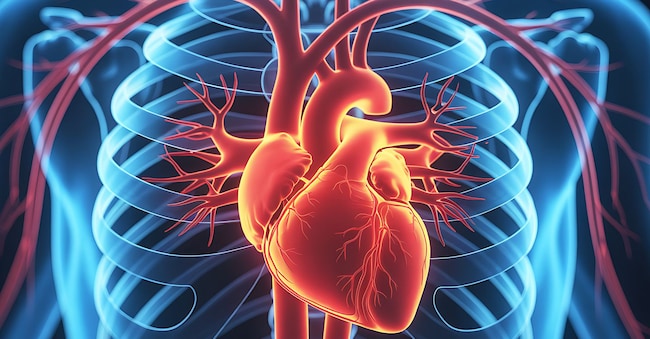
This work started from an observation known in medicine, but still little understood in terms of its mechanisms: the heart very rarely develops tumours and, even when metastases do occur, they tend to be smaller than those in other organs. Hence the logical step: the researchers investigated whether one of the explanations might lie in the mechanical nature of heart tissue, which is constantly subjected to contraction, pressure and deformation. The conclusion - entrusted to an international study published in Science, co-ordinated by the University of Trieste in collaboration with the International Centre for Genetic Engineering and Biotechnology (ICGEB) and the Centro Cardiologico Monzino Irccs - is that the beating of the heart helps to slow down the growth of tumours in heart tissue.
The Studio
The work, entitled 'Mechanical load inhibits tumour growth in mouse and human hearts', draws attention to a hitherto little-studied aspect: the physical forces acting in the myocardium do not only regulate cardiac function, but can also influence the behaviour of tumour cells, to the point of slowing down their proliferation.
The study involves partners in Italia, Austria, Germany, Norway and the UK, including the European Institute of Oncology, Medical University of Innsbruck, King's College London, University Medical Center Hamburg-Eppendorf, Simula Research Laboratory in Oslo. A broad and integrated network has allowed the combination of experimental, clinical, bioengineering and computational expertise.
The models
In their study, the researchers used different and innovative experimental models. On the one hand, they studied what happens when the heart is mechanically 'unloaded': under these conditions, cancer cells proliferate much more. On the other, they used lab-engineered heart tissue, in which it was possible to modulate the mechanical load and directly observe the response of the tumour cells. The result was consistent: when the heart tissue beats and generates mechanical load, tumour growth slows down; when this stimulus is reduced, the tumour cells start proliferating again.
"Our results show that the cardiac pulsation is not only a physiological function, but can act as a natural suppressor of tumour growth," says Serena Zacchigna, Professor of Molecular Biology at the University of Trieste and head of the ICGEB's Cardiovascular Biology laboratory. "This suggests that the cardiac environment is unfavourable to tumour cells not only for immunological or metabolic reasons, but also because its continuous mechanical activity physically limits their expansion.

