
IFA 2026, from AI to robots: here’s what to look out for in Berlin

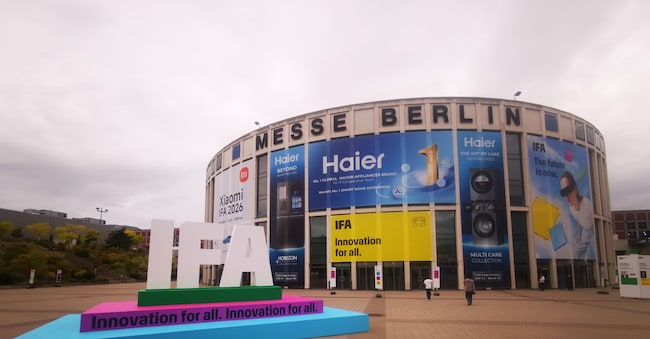
BERLIN – Berlin’s major technology exhibition opens its doors to the public today, 4 September, putting artificial intelligence and robotics centre stage – just as it did last year – in abundance, alongside an equally rich array of increasingly intelligent devices and new forms of interaction. Not to mention the sustainability factor, a few highlights on mobility, and the varied array of gadgets to admire at the now-classic ShowStoppers event. The highlight of this year’s edition (the first of which took place way back in 1924) is, as mentioned, AI, presented in all its forms as a technology that is beginning to perceive and act within the physical world, finding its way directly into the objects we use every day: household appliances, TVs, personal devices (smartphones first and foremost) and even cars. In short, artificial intelligence is stepping off the screen and into everyone’s daily lives, and this will be the overarching theme of the event. Leif Lindner, CEO of IFA Management, noted in recent days how the pace of technological evolution is outstripping that of previous industrial transformations, summarising the concept as follows: “The future is no longer something on the horizon; it is now.” And it is now that the long-heralded marriage between AI and robotics is coming to fruition; at IFA 2026, it moves beyond the experimental stage to become both a spectacle and a practical demonstration: autonomous robots will compete in football matches to win the RoboCup, whilst ‘Robots on the Runway’ brings humanoids and similar robots onto the stage for live entertainment.
A reasonably healthy market
Data presented by GFU Consumer & Home Electronics shows that the global market for technology and durable goods continues to grow despite geopolitical tensions, inflation and pressures on supply chains. In the first half of 2026, global revenue, excluding North America and Russia, rose by 6 per cent to $430.5 billion; adjusted for currency effects, growth stood at 2.4 per cent. Demand is being driven primarily by premium appliances that offer greater convenience, improved performance, energy efficiency or new ways of using them; among the fastest-growing categories are small household appliances, which grew by 5 per cent, whilst the broad category of consumer electronics saw growth of just 2 per cent. Looking at individual products, the top sellers include ‘Space-Fit’ fridges, robot vacuum cleaners, personal computers with built-in AI and televisions with screens of at least 75 inches. The market, too, generally confirms what industry experts and vendors have been saying for some time: artificial intelligence and robotics (alongside next-generation wearables) are among the areas with the greatest growth potential for 2026. And this trend is set to be clearly demonstrated across the halls of Messe Berlin.
An increasingly cross-cutting event
One of the most interesting aspects of IFA 2026 is also the expansion of the exhibition area beyond the stands showcasing products and installations. The new relationship between technology and people, the new configuration of domestic spaces and changing consumer behaviour will be the focus of discussions between companies, start-ups, analysts and public decision-makers at the Retail Leaders Summit, the new Retail Innovation Zone, the Smart Living Forum and the well-established IFA Next. There are five thematic tracks: World of AI & Future of Tech, Retail & Future of Commerce, Marketing & Creativity, Culture & Lifestyle, and Smart & Sustainable Living. And then there is the experiential dimension, which is becoming increasingly prominent. In other words, it’s not just about stands and presentations, but devices to try out, robots to watch in action, cookery demonstrations, beauty treatments and live podcasts. This approach also includes the new IFA Mobility area, which has moved to CityCube Berlin for the first time (without Samsung, which this year has opted for a venue outside the exhibition centre), where electric cars, bicycles, cargo bikes and scooters will be showcased, whilst a 200-metre test track will offer visitors the chance to try out e-bikes and e-scooters for free. Finally, there will be plenty of initiatives promoting inclusivity (such as guided tours for blind or visually impaired people) and aimed at further rejuvenating the IFA audience: according to figures released by the organisers, one in two private visitors is under 35, and around two in three visitors return to the fair having already attended a previous edition.
Useful information
For those visiting IFA, the first useful tip is to download the official app, which serves as a digital guide to the event: it contains the programme, a map of the halls, navigation tools, favourites lists and networking features. The fair will run from 4 to 8 September and, amongst the many events on the programme, the main ones will take place on the Dream Stage and Innovation Stage, where keynotes, masterclasses and pitches by various CEOs are scheduled: the opening on 4 September at 11.00 am will see Jack Huynh from AMD take to the stage with a talk dedicated to the new era of ‘Personal AI’. For those wishing to explore the world of start-ups and technologies still in development, the place to go – alongside IFA Next – is the IFA Pitch Battle. Outside the exhibition halls, the meeting point for everyone is the Sommergarten, which, as is tradition, will host live concerts and podcasts; the IFA Playbox area, on the other hand, is designed for children and families, offering gaming, creative activities and play. The organisers’ underlying vision is ambitious: to make tangible the transition from the technology we know to that which is beginning to make a real impact on our daily lives. At times, it has remained little more than a promise.

