
On a mission to Antarctica to prepare for life on the Moon and Mars
The human challenge of participants living in isolation for nine months at the centre of psychological and biomedical research
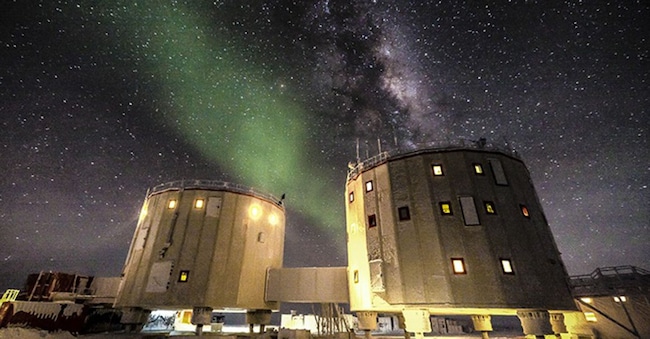
Nine months in Antarctica to prepare for life on the Moon or Mars. A challenge 'above all human' that the expedition participants face every year when they spend, in complete isolation, more than 270 days in the Italian-French Concordia Station, at an altitude of 3,200 metres. A situation highlighted by the psychological and biomedical research conducted inside the base, which today, as ENEA researchers point out, "represents the most remote outpost on the planet, even more inaccessible than the International Space Station in case of emergencies".
Temperatures down to -80 degrees
"Exposure to extreme temperatures, which drop as low as -80 degrees centigrade, absence of oxygen due to the high altitude, absence of sunlight for about four months - explains Denise Ferravante, psychologist, enea researcher and responsible for Pnra's psychological support of the winter over team, which has already been living in complete isolation for about two months this year as part of the 22nd research campaign - are among the factors that put physical and psychological resistance of the participants to the test'. Then there is the issue of total isolation. "During the winter period, no resupply and no evacuation are possible," he argues. "Paradoxically, while a crew in orbit on the International Space Station can return to Earth in a few hours, those at Concordia must rely exclusively on their own resources.
The basis for studying human adaptation
Managed by the French Ipev and the Italian Pnra (the National Research Programme in Antarctica, financed by the Ministry of Universities and Research and managed by the National Research Council for scientific coordination), on behalf of which the Enea handles logistics, the Concordia base "has become the best place on Earth to study human adaptation in Ice (Isolated, Confined and Extreme) environments. Not only that, because among the other possibilities is that of "transferring the knowledge acquired to space exploration, also thanks to the 20-year collaboration with the European Space Agency".
Research useful for future space missions
Psychological research on adaptation to extreme environments, besides being of utmost importance for future deep space missions, can be useful for groups operating in isolated conditions, such as oil platforms and remote scientific bases. That's not all: as the researchers point out, 'in addition to biomedical research, the Concordia station is also a technological test bed for telemedicine, life support systems, energy management and communications in isolated environments, which find an ideal testing ground in Antarctica'.
Living in an isolated environment
The researcher also highlights another aspect: 'Studies show that one of the most critical dimensions is the social dimension, due to living for long periods in an isolated environment and in a multicultural group,' she argues. Differences in age, culture and previous experiences can amplify misunderstandings, disagreements and intense emotional reactions. Moreover, the winter-over syndrome, characterised by altered concentration and memory capacity, nervousness, apathy, depressed mood, irritability and insomnia, can occur during the months of isolation, symptoms that are also accentuated by the alteration of circadian rhythms linked to light-dark periods. Our studies show that psychological health risks can be mitigated through effective countermeasures'.

