
In Cibum (training) explores the impact of AI on taste
Over the past seven years, the Salerno-based centre has trained 588 students, built up a network of 200 partner companies and involved Michelin-starred chefs in its teaching programme

Since 2019, 588 students have been trained on vocational courses in the food sector at the Centro In Cibum in Pontecagnano, in the province of Salerno, with a placement rate of 95 per cent. They have followed programmes tailored to the needs of partner companies, which guarantee students work placements – the primary route to employment. There are 200 partner companies and 2,500 professionals trained through the masterclasses.
A few facts that briefly describe the work carried out by In Cibum, a school of advanced culinary training, which serves as a point of reference for those wishing to embark on a career in the food sector from scratch, as well as for professionals seeking to update their skills and broaden their expertise through a range of professional training courses and high-level masterclasses in the fields of cooking, pastry-making, bread-making and pizza-making.
The School is part of the FMTS Group, a network of companies specialising in vocational training and management consultancy. The teaching staff comprises Michelin-starred chefs and recognised masters of pastry-making, pizza-making and bread-making, who work under the guidance of Resident Chef Marco Cefalo and coordinators Valentino Tafuri for the ‘In Forno’ and ‘In Pizzeria’ courses, Cristian Torsiello for the ‘In Cucina’ course and Carmen Vecchione for the ‘In Pasticceria’ course.
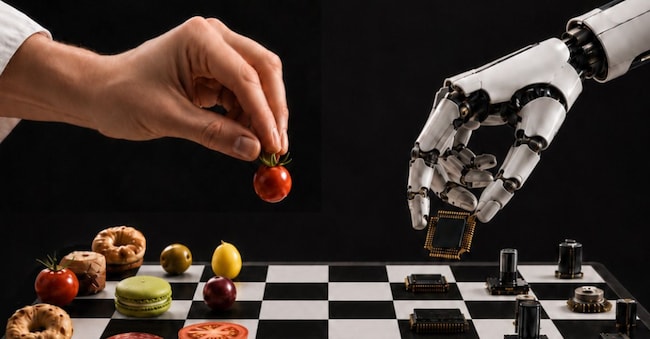
Every year, a special day – ‘In Cibum Extra’ – is dedicated to a topical theme. This year, the focus was on the impact of artificial intelligence on the sector’s processes, skills and business models, explored through talks, workshops and tasting sessions alongside the leading figures in the food world. This in-depth exploration stems from the realisation that taste begins to take shape even before the food is tasted. Colours, lighting, the font used on the menu and the shape of the plate all help to build expectations; memory, past experiences and reward mechanisms all play a part in how we perceive food. This is demonstrated by studies on the psychology of food choices conducted by Alessandro Fici, a visiting lecturer at the Neuroscience for Communication Lab at IULM University and the University of Milan.
In Cibum provides services to businesses: in the field of continuing professional development, having delivered 2,000 hours of training to 25 client companies. It also offers consultancy on new catering concepts (including the opening in Milan, on Via Piccinni, of Bonci Pizza in Teglia and Sfoglia Pastry Bar). It also collaborates with numerous schools: for example, it networks with the 336 Italian hospitality schools. It organises online sessions in which renowned chefs share their career journeys with hospitality students, attracting an average of 20,000 participants per session. The most recent guests were Carlo Cracco and Massimo Bottura. He organises a Summer School for young people aged 16 to 20.


