
Health

Nipah virus alarm in India: it comes from bats and is lethal up to 75%. What is at risk in Italy?

The highly lethal and transmissible Nipah virus has caused new outbreaks in India, prompting neighbouring countries to intensify airport and health controls.
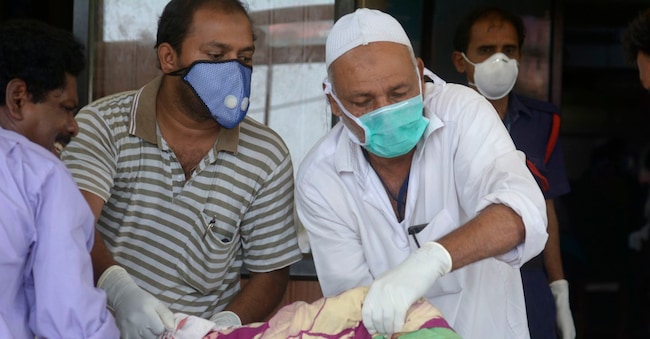
by Health Review

(AP Photo)

4' min read

Translated by AI
Versione italiana

4' min read

Translated by AI
Versione italiana

There is alarm in Asia over the Nipah virus of which a few cases have been reported in India.

Nipah, which sis transmitted from animals to humans, has no vaccine and a fatality rate of 40 to 75 per cent, according to the World Health Organisation.

Loading...

Indian authorities said they had ensured 'timely containment' of the virus after two cases were confirmed in the state of West Bengal. 'Enhanced surveillance operations, laboratory tests and field investigations were conducted, which ensured timely containment of the cases,' the Indian health ministry said in a statement.

The alarm prompted Thailand and Nepal to order additional checks: in particular for three Thai airports on passengers coming from West Bengal and for Nepal at Kathmandu airport and at land border points.

How transmission occurs and the first outbreaks

The Nipah virus pcan be transmitted from frugivorous animals such as pigs and bats (feeding mainly on fruit or sem, ndr) to humans.

It can also be transmitted viainfected food or even person-to-person. In infected persons, it causes a range of diseases, from asymptomatic infections to acute respiratory illness and fatal encephalitis.

The incubation period varies from four to 14 days.

The virus has been listed by the World Health Organisation as one of its ten priority diseases, along with pathogens such as COVID-19 and Zika, due to its potential to trigger an epidemic.

Nipah identification from pigs in Malaysia

Nipah was first identified in 1998 in a series of cases among pig farmers in Malaysia.

In India, the first outbreak was detected in West Bengal in 2001.

In 2018, at least 17 people died from Nipah in Kerala, and in 2023, two more people lost their lives in the same state to the virus.

During the first outbreak detected in Malaysia, which also affected Singapore, most of the infections were due to direct contact with diseased pigs or their contaminated tissues.

Transmission is believed to have occurred through unprotected exposure to pig secretions, or unprotected contact with the tissues of a sick animal.

In subsequent outbreaks in Bangladesh and India, consumption of fruit or fruit products (such as date palm juice) contaminated with urine or saliva of infected frugivorous bats was the most likely source of infection.

Transmission of the Nipah virus has finally also been reported among family members and carers of infected patients.

Symptoms, Lethality and Treatments Under Study

"The Nipah virus has been found in a wide range of mammalian hosts, such as pigs, horses, cats and dogs, which can be asymptomatic or develop mild or moderate disease, unlike humans who can develop disease with a lethality of up to 75 per cent.

In an unpredictable, but certainly sporadic way, it emerges from the animal ecological niche and this suggests that we are in fact facing the tip of an iceberg that causes outbreaks especially when the first human cases go to hospital and there the transmission is not properly contained,' warns Emanuele Nicastri, director of the Uoc of Infectious Diseases at High Intensity Care at the Inmi Spallanzani in Rome.

Affected patients initially show fluenza-like symptoms such as fever, nausea, sore throat, myalgia and headache; later they develop more severe manifestations such as an atypical pneumonia with respiratory distress and coughing or, more frequently, an acute and rapidly progressive encephalitis with a high mortality rate.

Solid evidence of human-to-human transmission comes from observations during epidemics in Bangladesh and India, whereas the same was not observed during the Malaysian epidemic.

How is the Nipah virus diagnosed? 'The Pcr molecular test is performed on blood as for other viral diseases,' illustrates Nicastri, while on the treatment side 'we have no really effective drugs,' he points out, 'although there are a number of hypotheses for therapy that are being considered, as is always the case in the early stages of an epidemic when there are still no effective tools. There is a lot of scientific literature on attempts at treatment with antivirals or monoclonal antibodies, but none has given evidence of efficacy. The same applies to vaccines: there are none that are effective'.

Could the virus be dangerous for Italy?

Could the Nipah virus outbreak in India be a danger to Italy with possible imported cases?

"I think not,' the expert replies. The typical tourist does not go to the poorer areas of India where there is the possibility of direct contact with the excrement or secretions of infected animals and where there is a risk of contagion.

In my opinion, the risk of importing cases from India into Italy is purely virtual'.

The alarm from India comes just as the 6-year anniversary of the Chinese couple from Wuhan who tested positive for Covid-19 and were admitted to Spallanzani: the start of the pandemic in Italy.

"We are not facing a new Covid," Nicastri clarifies.

Nipah, he explains, 'is a highly contagious disease that requires isolation and is self-limiting, i.e. it is very serious. The admission of the first patients to hospital facilities, in the initial phase of the epidemic, entails a risk of transmission among healthcare personnel. At this stage, lack of awareness of the risk leads to staff not taking the necessary personal protective measures. Once staff become aware of the situation, the outbreak generally tends to die out with the clinical outcome of the patients, i.e. through recovery or death'.

"Nipah is one of the deadliest viruses currently known, for which there is no vaccine or cure, and is considered a high-risk pathogen by the World Health Organisation. It is associated with a high mortality rate, between 40% and 75% depending on the epidemic and the viral strain involved. The disease manifests itself with some initial symptoms such as fever, vomiting and fatigue, and then evolves into respiratory and cerebral problems. Many countries bordering India are gearing up with controls at airports. At the moment, there is no need to be afraid, but we all need to be vigilant so that this outbreak, as in the past, is quickly limited,' confirms infectious disease specialist Matteo Bassetti.

Copyright reserved ©
Loading...

Brand connect

Loading...

Newsletter

Notizie e approfondimenti sugli avvenimenti politici, economici e finanziari.

Iscriviti