
India: the cockroaches have won – the Education Minister has resigned
It all started with yet another rigged university entrance exam. More than 2 million people had sat it
from our correspondent Marco Masciaga
 Aggiungi Il Sole 24 Ore
ai preferiti su Google
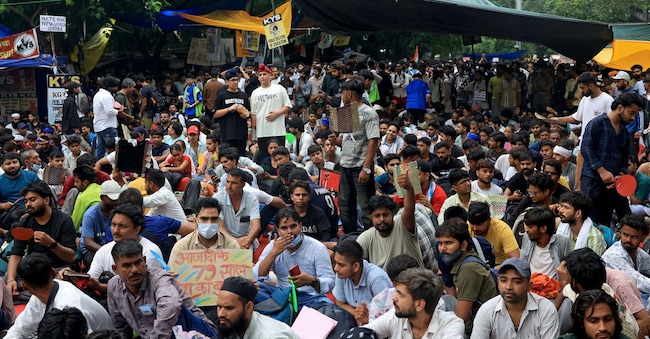
NEW DELHI - In the end, they won – the cockroaches: tens of thousands of young Indians who, armed only with irony, anger and a desire for a better future, took to the streets for the first time in their lives to demand – under the bizarre banner of the Cockroach Janta Party, or the People’s Cockroach Party – a strong signal of a break with the failed education policies of recent years.
And yesterday, the signal came. The Indian Minister of Education, Dharmendra Pradhan, gave in and sent his letter of resignation to the other major loser of the day, Narendra Modi. The most powerful, popular, controversial and feared Indian Prime Minister since the days of Indira Gandhi had, until a couple of days ago, attempted – as is his tried-and-tested practice – to ignore the protests.
Then, within 48 hours, he first had to acknowledge the situation and then give in to the students’ demands in an attempt to stem the rapid erosion of his image currently taking place online, where memes and provocations – a rare occurrence in a country where, according to Freedom House, the space for dissent has been shrinking for years – were spreading like wildfire.
This reflects the transformation that has taken place in the space of just a few weeks, even amongst the protesters who have taken to the streets. On the first day of the sit-in in the centre of New Delhi, many of them were unwilling to be photographed or give their personal details to journalists. In recent days, any such reservations have vanished, giving way to selfies, full names, and accusations and taunts directed at Modi and Amit Shah, his right-hand man and Home Minister.
By Friday, it was already clear that it would be very difficult to resist the demands of the students who were taking to the streets as part of a protest movement that had originated online. There were too many of them, they were too angry about last Monday’s police violence, and they were too unassailable, because ultimately what they were asking for was simple: for the government to take responsibility and a fairer and more transparent education system. Attempts by some members of the ruling coalition to portray the movement as a destabilisation campaign orchestrated by the usual ‘foreign hand’ have caused more embarrassment than concern.


