
There are 930,000 foreign pupils in Italia, accounting for over 11 per cent
These are the figures from the latest ISMU report, ‘Initiatives and Studies on Human Mobility’

Key points
From the stage at the Gioventù Nazionale festival, Fenix, Prime Minister Meloni announced a “measure approved by the Council of Ministers introducing the maximum number of foreign pupils per class and a ban on the burqa and niqab in schools’.
In Lombardy, more than a quarter of pupils are from overseas
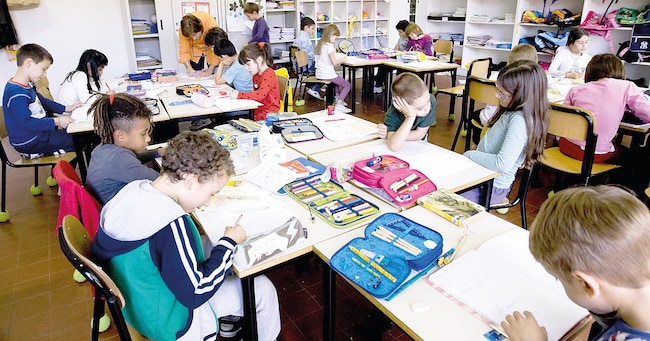
In Italian schools, from nursery to secondary school, there are 930,000 non-Italian pupils, accounting for 11.6 per cent of the total. More than a quarter are in Lombardy (236,000, or 26 per cent, an increase of 15,000 over four years), followed by Emilia-Romagna (112,839), Veneto (94,669), Lazio (80,051) and Piedmont (78,039). In terms of cities, the one with the most non-Italian pupils is Milan, with 79,039, followed by Rome (63,782), Turin (39,465) and Brescia (32,747). These figures are taken from the latest report by ISMU, Initiatives and Studies on Human Mobility.
The number of unaccompanied minors is higher in the south
Attendance figures are lower in the south, although the number of unaccompanied minors is higher there: whilst it is true that, in this case too, the highest number is in Milan (over a thousand), Catania comes second with 745. Non-Italian pupils face greater difficulties partly because they find themselves in disadvantaged circumstances: the risk of implicit school drop-out is higher (at 22.5 per cent compared with 11.6 per cent for Italians). However, some changes are taking place. For example, the number of foreign students in sixth-form colleges is rising, particularly amongst those born in Italia, although a gap still remains. In lower secondary school, over 50 per cent of Italian pupils intend to go on to sixth-form college, compared with only 38.3 per cent of foreign pupils.
Academic results
As regards academic performance, the Invalsi Report showed that foreign pupils in the third year of lower secondary school scored 22.6 points lower in Italian and 13.5 points lower in mathematics; as pupils progress through their studies, the gap in mathematics disappears but remains in Italian, whilst non-Italian pupils achieve better results in the English tests.
According to another study, this time by Idos, over the last 11 years the number of students with foreign nationality has risen by 16 per cent, whilst the number of Italian students has fallen by 12.5 per cent, thereby stemming the decline linked to the falling population, which has seen the total number of pupils fall from almost 9 million in 2014 to around 8 million today (-9.9 per cent). Of the approximately 931,000 foreign pupils, almost two-thirds (65.2 per cent, or over 607,000) were born in Italia: 11 years ago, this figure was just over half (51.7 per cent). Half of the foreign pupils are from the five main nationalities: Romanian, Albanian, Moroccan, Chinese and Egyptian; the remainder are spread across many dozens of other nationalities.

