
Penalties arrive in the House for those who change their names
Each parliamentary group has contributions based on the number of its members: if an MEP changes parties, he or she will no longer transfer his or her entire quota to the new group, but only 50 per cent, the other half will remain with the group of origin
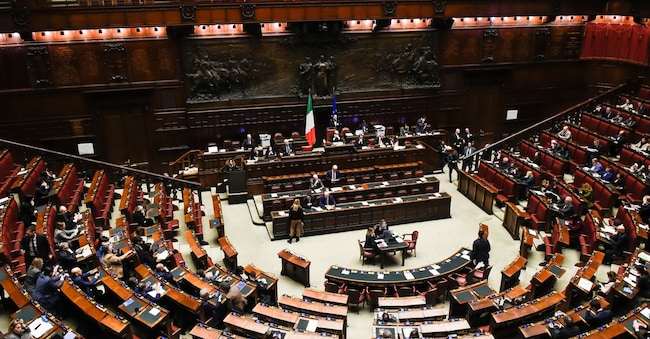
The reform of the Regulation of the Chamber ("Amendments to the Rules of Procedure to rationalise parliamentary work and enhance the role of the committees"), which will come into force in the next legislature, will arrive in the Chamber of Deputies on Monday 16 February for general debate and could already go to a vote on Tuesday. An absolute majority of the Chamber's members is needed for the go-ahead. The recent go-ahead by the Rules Committee was almost unanimous: only the 5-Star and Avs abstained.
Among the main novelties are the abolition of the 24-hour deadline that must elapse from when the question of confidence is put to the vote, the statute of the oppositions, and the measures penalising changes of coat. All this is happening in the days in which the vannacciani split from the League is taking place. As for the measures that penalise changes of colours, two levers are being looked at: economic contributions and appointments. In Montecitorio, each parliamentary group has funds based on the number of its members: if a deputy changes party, he will no longer transfer - as is the case now - his full quota to the new group, but only 50%, while the other half will remain with the group of origin.
Forfeiture of offices held
There is also provision for the disqualification from holding almost all offices (with the exception of the Speaker) in the Bureau and Commissions. Penalties on contributions for switching sides will not apply if at least seven MEPs move from one group to another at the same time. Since in this case, there would be 'a split' on an 'evidently political basis', as explained by the rapporteurs Federico Fornaro (PD), Igor Iezzi (Lega) and Angelo Rossi (FdI).
Other new features include the long-awaited overcoming of the 24 hours that must elapse from the placing of the confidence question to its vote and the statute of the oppositions. In addition to this, the possibility of a time limit for decree-laws is introduced: a provision that balances the need to approve decrees in a time frame that is not too long while leaving them to the ordinary parliamentary dynamics. More. In order to avoid not only the use of trust, but the very recourse to decree-laws, the possibility is given to set a final deadline for the approval of urgent bills. This is known as 'date certain voting'.
The protection of parliamentary minorities
Space is also given to parliamentary minorities, with the consolidation of the statute of the oppositions with a series of guarantees for the legislative initiatives of parties that are not in government. First and foremost, the practice is codified whereby the chairmanships of the election and authorisation committees are attributed to members of the opposition, providing for their disqualification in the event of their transfer to majority groups. And then the objective is pursued of making the examination of bills included in the calendar of proceedings at the request of an opposition group effective: in addition to dedicating at least one session per month to their examination, it is provided that the date of their inclusion in the calendar cannot subsequently be postponed by the conference of group leaders, unless the group concerned agrees. More generally, on topics entered in the minority quota, no requests for the reversal of the agenda, postponement of consideration, or prejudicial questions on substantive grounds will be allowed in the assembly. It remains possible, no more than twice, to deliberate on referral back to committee. Another innovation, which is in line with innovative trends in European parliaments, is the possibility for committees to set up public policy evaluation committees.

