

The future of prevention lies in the 'dark side' of DNA
Human Technopole research yields new tools to predict and prevent common diseases such as hypertension, cancer and high cholesterol
by Michela Moretti
 Aggiungi Il Sole 24 Ore
ai preferiti su Google
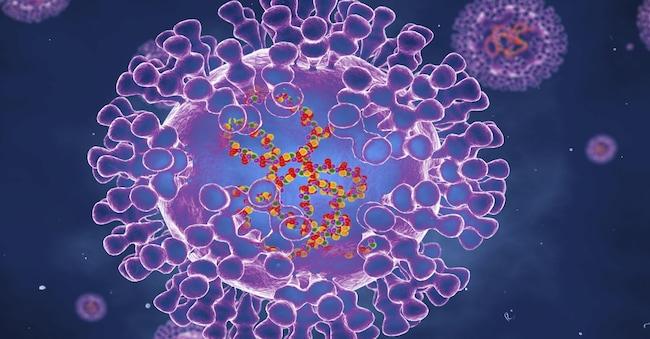
Knowing from an early age the genetic predisposition to obesity or hypertension will one day make it possible to set personalised prevention paths and significantly reduce the risk of the disease. Underlying this perspective is our knowledge of the non-coding DNA, a large portion of the genome, about 98%, that does not produce proteins.
The 'dark DNA' that regulates health
For years referred to as 'dark Dna', or junk Dna, because it is considered to have no functions, research has now realised that it instead represents the control network that regulates the activity of genes and conditions many processes underlying health and disease. 'Non-coding regions,' explains Nicola Pirastu, biologist and head of the Biostatistics Unit of the Human Technopole's Genomics Research Centre, 'control the activation of genes that code for proteins. They do not change the quality of the proteins produced, but the quantity or their presence in a certain type of cell. In this sense, they function as a fine-tuning system that also responds to environmental stimuli.
It is in the non-coding DNA that most of the genetic variants associated with common diseases are concentrated.
'Most of the variants we study,' says Pirastu, 'are inherited and are concentrated in the non-coding DNA, thus acting more like volume knobs rather than switches. Changing how much and when a protein is produced can be enough to determine a higher or lower risk of developing a disease.
One interesting case concerns hypertension: 'In the Japanese,' Pirastu recounts, 'the gene most associated with high blood pressure is the one encoding a liver protein that metabolises alcohol. Those who have a variant that reduces its activity are unable to metabolise alcohol well, feel uncomfortable when they drink and therefore tend to drink less: in fact, this protects them from hypertension. Those who have the opposite variant, on the other hand, feel no discomfort and tend to drink more, increasing their risk. Even if this variant changes the protein, its final impact is strongly modified by variants that instead act on the quantity'.

