
In this way, the food and drink sector is also exporting cutting-edge Italian technology
70 per cent of food production machinery is sold abroad: Italia is a leader in sectors such as coffee and bakery products. According to Anima, following a 6 per cent increase in 2025 to 5.5 billion, there has been a slight slowdown this year due to the adverse economic climate

When we talk about ‘Made in Italy’ in the food and drink sector, we think of pasta and pizza, espresso and sparkling wines, olive oil and tinned tomatoes, wines and balsamic vinegar, and many other products that have ‘captivated the palates’ of consumers across every continent.
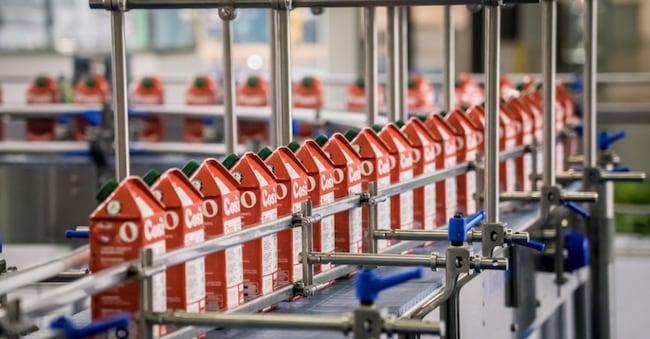
But Italian expertise in the food sector is also brought to the world by the companies that develop and manufacture the technologies and production solutions that underpin what we put on our tables, from machinery to packaging, from automation to the IoT, from robotics to labelling. This is a vast sector that represents a national strength, given that around 70 per cent of food & beverage machinery production is sold abroad (source: Anima).
In the mechanical engineering sector, Italia continues to be an international benchmark thanks to a perfect blend of creativity and engineering rigour, with recognised leadership in ovens and machinery for the bakery sector, which in 2025 generated over 470 of its 695 million euros in turnover abroad (source: Assofoodtec). Another flagship product of ‘Made in Italy’ is professional espresso coffee machines, where overseas markets account for around 80 per cent of total turnover and units produced, shipped to over 150 countries (source: Ucimac). But we also play a leading role in household goods, pasta-making machinery (see separate article, ed.) and commercial refrigeration equipment.
“Food technologies are a strategic component of the Italian mechanical engineering sector and underpin the quality of the food industry with technologies that combine productivity, efficiency and safety, bringing the expertise and innovation of our companies to international markets,” emphasises Pietro Almici, president of Anima (Confindustria Meccanica Varia). “It is a sector that continues to maintain production in Italia, with entire industrial districts that embody the social fabric, expertise and know-how of an entire supply chain.”
In 2025, exports of food technologies represented by the trade association Anima recorded an annual growth of 6 per cent, exceeding 5.5 billion euros. The first half of 2026, by contrast, was characterised by stability (-0.5%): exports stood at €2.7 billion, affected above all by the 13 per cent decline in vending machines, which account for 7 per cent of the total value. However, the sector is also being weighed down by the difficult international geopolitical context, which has put many investments on hold, as well as tensions surrounding agricultural commodities (coffee in particular), and rising energy and transport costs.

