Justice

Judicial year in Appeal Courts, tension over reform. Nordio: 'It does not strengthen the government'

After the opening of the 2026 judicial year in the Supreme Court, it is the turn of the twenty-six Courts of Appeal

by Lorenzo Pace

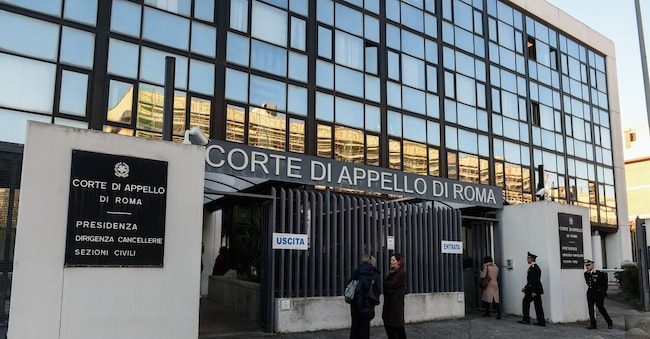
CORTE DI APPELLO DI ROMA

3' min read

Translated by AI
Versione italiana

3' min read

Translated by AI
Versione italiana

After the opening of the 2026 judicial year in the Supreme Court, it was the turn of the twenty-six Courts of Appeal. In a tense atmosphere, less than two months after the referendum on the separation of careers, the reports of the presidents for the individual districts were heard, which raised alarm bells about the reform and the position of the toughets.

Nordio in Milan

A reform that Nordio, who was present in Milan, defended (just as he had done during his speech at the Cassazione in front of head of state Sergio Mattarella) by saying that it 'will not and must not have political effects. This law,' he added, 'is made neither against anyone nor in favour of anyone. It is not to punish the judiciary and it is not to strengthen the government, which does not need to be strengthened'.

Loading...

Should the 'yes' vote prevail in the referendum on 22 and 23 March, he added, 'far from having persecutory intentions, as some say, we would immediately, the day after, begin a dialogue with the judiciary, the legal profession and the academic world for the second part of the reform, which is that of the implementing rules'.

Mantovano: 'No false slogans'

"No apocalypse" after the vote said instead Alfredo Mantovano, who was present in Naples, where he stressed the participation of the opposition for the parliamentary lists to be proposed for the 'lay' quotas in the Csm. "The confrontation between opposing arguments is all very well," he added, "but not the false slogans according to which judges will depend on the government or the government will claim impunity. Throwing slogans is serious if it is those who do justice in their daily lives who do it'.

From Palermo: "Falcone's name exploited"

The topic of reform was touched upon by the presidents of the Courts of Appeal. Some spoke of the current state of the togas, others spoke more explicitly. In Palermo, for example, the president of the district Matteo Frasca said that "the name of Giovanni Falcone, who had placed the issue of separation among those of importance in the context of the different professionalism required of the investigating magistracy by the new code of criminal procedure, is being used instrumentally, even though, contrary to what was casually attributed to him by the supporters of the reform, he had not been an apodictic supporter of it, but had brought it to the attention of the experts as a subject on which to discuss, similarly to the equally thorny subject of the mandatory nature of criminal proceedings'.

"Unacceptable to say that the judges are flattened by the demands of the public prosecutors"

In Milan and Rome, the position of the 'toghets' was discussed. In front of the Guardasigilli, the president of the Corte d'Appello di Milano Giuseppe Ondei said that 'it is not acceptable' to claim that 'judges are not sufficiently third party and impartial because they would be flattened by the demands of the 'fellow' public prosecutor'. If this statement 'were true, there would be a serious emergency for the rule of law. But it significantly goes unnoticed by any international body'.

The Prosecutor General of Milan, Francesca Nanni, on the other hand, spoke of a 'substantial uselessness of the reform in correcting the current very serious deficiencies'. This raises the 'doubt that it is an intervention with a predominantly punitive character'. He spoke of a 'waste of time and resources' to the detriment of other reforms such as 'a strengthening of the instruments necessary to guarantee the effectiveness of punishment' or the possibility of 'providing definitive answers in a certain and adequate timeframe and ensuring their execution'.

From Rome, the alarm over the 'vulnerability of the togas'

"The role of courts and judges," said instead the president of the Court of Appeal of Rome, Giuseppe Meliadò, "is more central and decisive than ever, and yet never before have courts appeared fragile and vulnerable, exposed to the censure of a common sense that describes them as a threat and a trap for the exercise of public powers, instead of as an irreplaceable regulator of social complexity.

Giuseppe Amato, Attorney General of the Court of Appeal of Rome, added that 'many normative initiatives, although important, have been put on a dead track, precisely with the intention of favouring, without ifs and buts, the separation of careers. This is undoubtedly mortifying for the category'. For Amato, 'a mortified category is a category that may run the risk of closing in on itself and that, precisely because it is separated, may end up losing its own sense of impartial position'.

At Caltanissetta: "Priority is Niscemi"

Another topic touched upon was that of Niscemi, a territory that represents 'Italy's priority' for the president of the Caltanissetta Court of Appeal, Domenica Motta, head of the Nisseno district that also includes the Gela public prosecutor's office where an investigation into the landslide has been opened.

Copyright reserved ©

Brand connect

Loading...

Newsletter

Notizie e approfondimenti sugli avvenimenti politici, economici e finanziari.

Iscriviti