

The deluge of drones is becoming ever more intense. ‘Confini’ explores the link between the trenches and computers
The drone war between Russia and Ukraine is intensifying. Distances that were once unthinkable and the ability to carry out targeted strikes on the most sensitive infrastructure are now key factors in the tensions in the Middle East and, above all, in the conflict between Moscow and Kyiv. Watch online the episode of NextMed’s TV programme ‘Confini’. Between computerised trenches. Life and death beneath the hum of drones. But also technology that has transformed the defence industry landscape
by 24Ore nextMed
 Aggiungi Il Sole 24 Ore
ai preferiti su Google
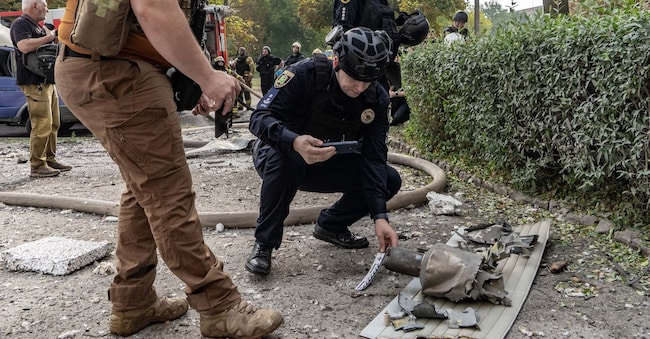
Originally built for military purposes, drones have seen – particularly in recent years – exponential growth in the consumer electronics market as well, extending to their use for goods delivery. However, it would be impossible to tell their story without referring to their military origins. The year was 1849, and the first experimental drones were used during the siege of Venice. One of the artillery officers under the Austrian general Von Radetzky, Lieutenant Franz Von Uchatius, had the unlikely idea of launching unmanned hot-air balloons. The attempt failed, and it was not until 1907 that the first quadcopter – the forerunner of today’s drones – appeared. However, the first genuine large-scale applications did not emerge until the 1940s. The OQ-2 radioplane was the standout example. It was manufactured in a factory in Los Angeles where Norma Jeane Dougherty worked – a woman who would shortly afterwards change her name to Marilyn Monroe. In the post-war period, development was slow, so much so that to witness a real breakthrough we have to look to Ukraine. Here, the combination of drones and satellite technology has made all the difference. At the start of the war, in 2022, fewer than 500 drones were produced in Ukraine. By 2025, Ukraine had set a production target of around 4.5 million drones (primarily FPV drones, but also reconnaissance drones and long-range UAVs). The final figure was very close: 4 million. Meanwhile, the target for the current year – achieved in part through the efforts of over 160 companies – is to reach 8 million units. This explains the enormous number of attacks, often carried out using entire swarms. The AN-196 Liutyi and FP-1 drones have become key assets. The FP-1 is said to have a range of around 1,600 kilometres and a cost of approximately $55,000. This is not insignificant in absolute terms, but it is much less than the cost of a cruise missile. In 2025, Ukraine is said to have launched between 18,000 and 22,000 drones towards Russia, a massive increase compared with 2024. Moscow claims to have shot down around 22,500 out of an estimated 25,000–27,000 launches, which is a very high reported rate. Beyond partisan claims, these figures are reflected in stock market trends and, more generally, in the widespread adoption of these systems around the world. According to Visionofhumanity.org, last year over 460 armed groups made use of unmanned aerial vehicles, leading to an estimate for 2026 of 60,000–100,000 attacks in theatres of war worldwide. But it is not just about the cold, hard facts of economics and technology. There are human consequences. The fear felt by civilians and soldiers, who must now live with the deadly hum of these new technologies. However, there is also non-military use, and there are civilian applications that save lives, as was the case in Rwanda with telemedicine. How are these technologies evolving? And how do anti-drone defence systems work? How does artificial intelligence applied to warfare work? The following guests discussed this with presenter Simone Spetia and Claudio Antonelli, deputy editor of 24Ore NextMed: Giampaolo Musumeci, a journalist at Radio 24 and presenter of *Nessun luogo è lontano*, Enrico della Gatta, vice-president of Fincantieri and author of the book *Difendere il futuro. Finanza, innovazione e geopolitica nella nuova economia della sicurezza* (Defending the Future: Finance, Innovation and Geopolitics in the New Security Economy); and, finally, Domenico Vigilante, VP and Chief Technology Officer of Leonardo’s Electronics division.

