

The integrated Italia-Africa training network is launched
The Enel Study Centre Foundation brings together Italy’s leading universities: work has begun on mapping the first 250 projects under the Mattei Plan
by 24Ore NextMed
 Aggiungi Il Sole 24 Ore
ai preferiti su Google
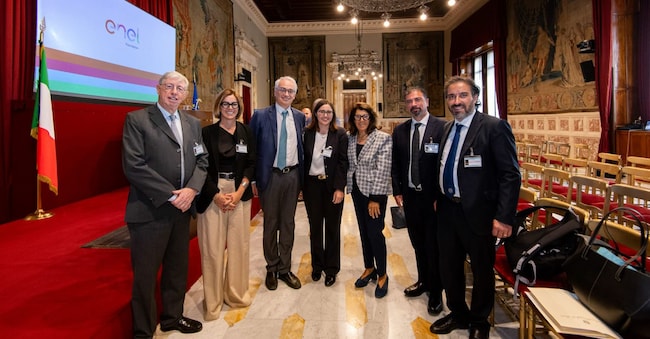
The first mapping exercise for academic cooperation under the Mattei Plan has been launched. The vice-chancellors of Italy’s leading universities met last week at Palazzo Montecitorio to discuss the future of cooperation in the context of the energy transition. The aim is to establish a stable platform for cooperation between the two continents, capable of integrating research, training and skills development relating to the energy transition. The event, ‘Italia-Africa: Collaboration and the Development of Local Skills and Capacities’ – organised by the Enel Centre for Studies Foundation – also brought together representatives from institutions, members of parliament and African academic partners. The proceedings opened with institutional addresses by the President of the Chamber of Deputies, Lorenzo Fontana, and an endorsement of the project by the Minister for Universities and Research, Anna Maria Bernini, who highlighted the role of education as the true infrastructure of sustainable development, followed by a welcome address by Federico Mollicone, Chair of the Committee on Culture, Science and Education, Chamber of Deputies. ‘The development of human capital is the prerequisite for any initiative to produce lasting and widespread results. The strength of the Mattei Plan lies precisely in this: an integrated approach that combines listening, training, regulatory capacity, industrial development and development cooperation within a single national strategy, capable of bringing together diverse skills and channelling them towards common objectives,” stated Lorenzo Ortona, Deputy Coordinator of the Mattei Plan. “The aim is to build on what is already working, gradually expanding its impact. The collaboration between the mission structure for the implementation of the Mattei Plan and the Enel Study Centre Foundation also forms part of this approach.”
During the morning, the preliminary results of the mapping exercise were presented by Anna Veronica Gianasso, head of the task force for the implementation of the Mattei Plan for Africa, and by Giulia Genuardi, director of the Enel Centre for Studies Foundation.
Coordination
The mapping exercise highlights an active and well-established academic ecosystem, characterised by complementary areas of expertise and a growing trend towards structured, multi-year programmes, with a consistent female representation of 30–35 per cent. It is not, therefore, a question of adding new projects to existing ones, but of moving away from the logic of individual initiatives towards the construction of a permanent infrastructure – a model based on the diplomacy of knowledge. The Enel Foundation has been operating in Africa for several years and, since 2014, has trained over 5,000 people through its training programmes on the continent. These include the creation, in partnership with RES4Africa and local universities, of three hubs in Morocco, where the Multifunctional Centre for Training and Research on the Energy Transition in Africa was established in 2024, followed in 2025 by two further hubs in Kenya and South Africa.
How it works
Each hub offers management and technical-professional training courses, as well as mentoring programmes for start-ups operating in the renewable energy sector, alongside initiatives aimed at young people and programmes specifically designed to encourage women’s participation in the energy sector. The next steps, which have already been outlined, involve the establishment of a working group with the Enel Study Centre Foundation acting as the coordinating hub, the enhancement of the information database, the improvement of data granularity, and the evolution of the mapping process towards a dynamic monitoring system capable of integrating impacts, activities and relationships over time, with the definition of shared key indicators. The projects were analysed according to four main categories – training, teaching, research and partnerships – and the data were provided by Bocconi University, Luiss, the Milan Polytechnic and the Turin Polytechnic, supplemented with publicly available information from the National School of Administration, the Campus Bio-Medico University of Rome and the Catholic University of the Sacred Heart.
Projects
Bocconi, for example, has three project models to its credit: the LEAP (Lab for Effective Anti-poverty Policies) laboratory, which designs and evaluates anti-poverty interventions using experimental methods, big data and artificial intelligence; the CERGAS Digital Health programme, which assesses the costs and effectiveness of digital technologies for immunisation in low- and middle-income countries, generating evidence for global organisations such as the WHO and Gavi. The Politecnico di Milano has numerous projects focused on innovation and capacity-building in support of the energy transition. The School of Government at Luiss Guido Carli University presented its executive programmes on international diplomacy and Italia-Africa cooperation, aimed at diplomats from 54 African countries. The Polytechnic University of Turin also shared its expertise, which includes projects to reduce climate risks, cooperation programmes for access to water and rural development in Ethiopia, and advanced collaborations in the energy sector and the energy transition, with a strong emphasis on technology transfer. The Catholic University of the Sacred Heart outlined the launch of the USCS Africa plan, explaining how, over the last three years, 130 projects have been carried out in 40 African countries in partnership with around 40 local universities. The Campus Bio-Medico University of Rome presented the Afya Moja (One Health in Swahili), which supports 31 African universities in participating in European projects and in drafting WHO and ISO standards; the project is funded with €2.8 million from the Ministry of University and Research (MUR) under the National Recovery and Resilience Plan (PNRR) and involves over 15 university cooperation projects with 10 African institutions across six different countries. Furthermore, during the session dedicated to public administration, Paola Severino, president of the SNA, highlighted the importance of training not only civil servants but also the trainers themselves, as part of a process of co-construction and mutual investment.

