
Intel responds to rivals: we will bring AI everywhere, from PCs to the edge
At Computex it is Intel's turn to explain how it will respond to Qualcomm and Amd in the race for the heart of Ai computing

3' min read
3' min read
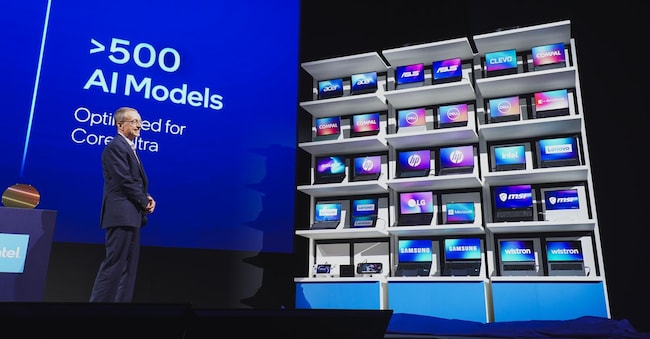
Could Intel's response to the announcements by Qualcomm; Amd and Nvidia have been missing at Computex in Taipei? Of course not, and indeed it has arrived on time, in the form of new products (chips and architectures) and with the imprinting given by Pat Gelsinger at the keynote: 'AI,' the CEO explained, 'is driving one of the most significant eras our industry has ever seen, and once again the magic of silicon is enabling computing to make advances that will stretch the boundaries of human potential and power the global economy for years to come. And we are one of the few companies in the world to innovate across the entire spectrum of artificial intelligence." Joining him on stage, sharing his intentions, were the number ones of Acer (Jason Chen), Asus (Jonney Shih), Inventec (Jack Tsai) and also that of Microsoft, Satya Nadella.
Intel, therefore, is not going along with this, and is resolutely fighting back against the onslaught unleashed by its rivals astride the new generation of Windows-based Ai Pcs and reaffirming its central role in the present and future economy of the semiconductor industry. How? By bringing to the table technologies designed to significantly accelerate the entire hardware ecosystem and software revolving around the massive use of artificial intelligence, and thus data centres and infrastructures for the cloud, network and edge computing systems, and personal computers, a business that the Californian colossus does not seem to want to give up in the slightest.
Acting as a common denominator to this strategy are the same factors that characterise the road map of all chip manufacturers and the whole game (never been so open) for dominance in silicon, and thus greater computing power, greater energy efficiency and lower operating costs.
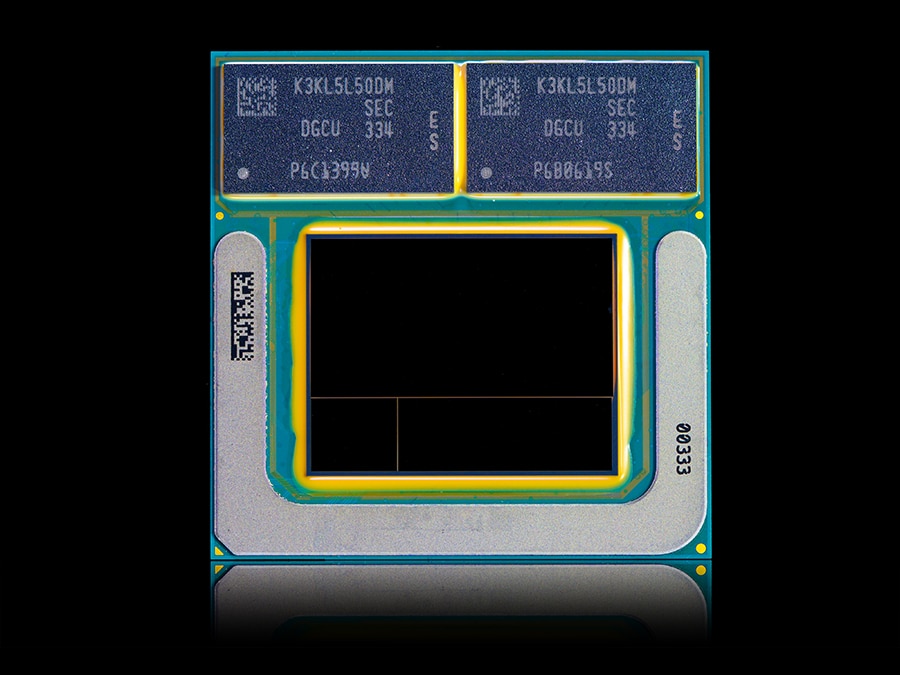
The new Xeon chips and Lunar Lake architecture for Gen AI
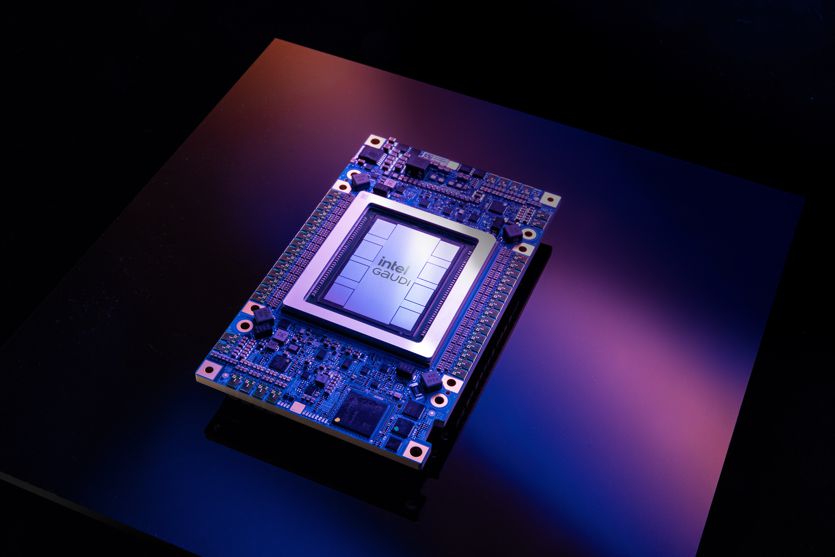
.On the product front, topping Intel's list of announcements are the first data centre processors in the Xeon 6 family with Efficient-core, codenamed Sierra Forest, which arrive just six months after the launch of the fifth-generation Xeon chips and come with the features needed to consolidate racks by a factor of 3 to 1 on multimedia transcoding workloads, improving performance by up to 4.2 times and increasing performance per watt by up to 2.6 times over previous products. Alongside them, to make AI applications faster and more accessible, Intel is deploying the Gaudi 2 and Gaudi 3 acceleration kits, whose costs (according to company spokespersons) are up to a third lower than those of the competition. On the client architecture front, however, the new entry is called 'Lunar Lake', which is scheduled for availability in Q3 2024. It is, in fact, the new platform based on x86 technology on which the Intel Core Soc (System-on-Chip) that will equip the next AI PCs will be developed, with the promise of consumption up to 40% lower than the previous generation and three times the computing power for generative artificial intelligence applications, and will enable the Santa Clara-based company's next onramps, namely a fourth-generation Neural Processing Unit (NPU) with up to 48 tera-operations per second (TOPS) in AI performance, and a completely new graphics unit (codenamed Battlemage) combining Xe2 GPU cores for graphics and Xe Matrix Extension arrays for artificial intelligence.
The AI PC Challenge
.In a scenario that, according to forecasts, will see AI PCs make up almost 60% of the new models sold by 2027, there are about a hundred software vendors that have embraced Sata Clara technology and over 500 models supported by the proprietary Core Ultra platform. And starting from these numbers, at Computex Intel's top management wanted to point out how, in the face of those (read Qualcomm) who are about to enter this promising market, there are those (Intel) who have already been distributing their products on a large scale for some time and have overtaken everyone in the ranking of deliveries of processors for AI PCs in the first quarter of 2024. The new Lunar Lake architecture will also support more than 80 AI PCs from 20 different OEMs and will contribute in the company's intentions to bring more than 40 million Core Ultra processors to the market by the end of this year. Intel, in short, does not quit, if anything (this is the message coming from Taipei) tries to double down.

