The study

Investing in the home? Better value than the stock market (but only in the centre of Milan)

In 50 years, residential investment in Lombardy's capital city has appreciated by 3,529% compared to 3,369% for Piazza Affari

by Laura Cavestri

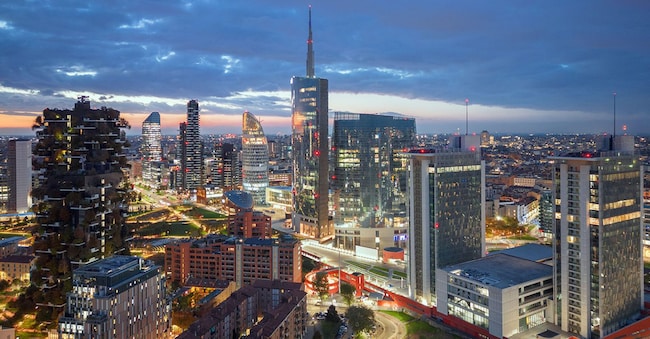
Milano Porta Nuova. (Alamy Stock Photo via Reuters)

3' min read

3' min read

Has the stock market or the house returned more in 50 years? "Making 100 the base year of reference, precisely 1975, since then the historical Ftse Italia Mib (based on Italian Stock Exchange data) has grown by 3.369%, the average interest rate on government bonds by 2.900%, the dollar/ounce gold price index by 2.139%, inflation by 1.250 per cent. And if a house in the centre of Rome, which grew by 3.228 per cent, 'heels' the stock market index, the centre of Milan beats everyone, with a revaluation in half a century of 3.529 per cent'.

This is how Mario Breglia, president and founder of Scenari Immobiliari explains not only how - net of the judicial events - the Milanese residential market knows no brakes, but also how the entire Italian sector is proving to be very resilient.

Loading...

The occasion was the presentation, yesterday in Milan, of the Osservatorio sull'Abitare, produced by Scenari Immobiliari and Abitare Co. during the Fourth Forum dell'Abitare.

Numbers in Italy

.

In ten years, the turnover of the Italian residential sector has grown by 49 per cent to reach EUR 123.7 billion in 2024 (+5.7 per cent compared to 2023) and with an estimated growth of 8 per cent in 2025.

In 2024, 720,000 homes were bought and sold (+1.4% over 2023), of which only 55,000 were new constructions. Paradoxically, just six for each Italian municipality. By 2025 it is estimated that sales will reach around 770 thousand (again, only 66 thousand new ones).

Price estimates

.

And prices? They will not fall. After an increase of 2.2 per cent in 2024 over 2023, the estimate for this year is that values could rise by up to 5 per cent due to the reduced availability of a housing supply in line with demand, especially in the markets of the most attractive capitals and their hinterlands. In particular, it is precisely the structural shortage of new construction that will cause prices for new construction to rise from 5.8% in 2024 to an expected 6.5% in 2025.

"Nowadays, we no longer talk about 'housing' as an object, but it is 'living' that is the focus of our analysis," explained Breglia. "The search for the right neighbourhood in which to live is worth as much and perhaps more than the purchase price. The presence of greenery, security, schools, services are fundamental needs. A shortage of new and less supply even of used properties (also due to the push of short leases) are driving up prices, which are decidedly higher than the increase in incomes. With enormous delay, we are beginning to talk about investments in housing by the public sector. But big investors are still disincentivised in our country'.

"If we look at Milan," added Giuseppe Crupi, CEO of Abitare Co., "the capital is no longer able to meet housing demands. The time has come to think of a market that encompasses the entire metropolitan city, including all the neighbouring municipalities connected to the capital by metro and railway lines".

'Residential is a sector that, compared to others, can also benefit from non-core investors,' explained Corrado Trabacchi (Orion Capital Managers), 'but the slowness of permits and the absence of clear rules on urban regeneration divert capital elsewhere. Business plans are getting longer and economic cycles are getting shorter. We invest much more in Spain. Moreover, the dwarfism of operators only offers small deals. It is difficult to buy platforms and listed companies'.

If the government's Piano casa is moving laboriously, with an initial allocation of 660 million (between pilot projects 2027-2028 and implementation 2028-2030), in addition to the unused Pnrr resources in the Pinqua programmes (between 300 and 400 million), "in the absence of updated national legislation, for the 10,000 new units Piano casa of the Milan municipality we have already received 24 proposals for expressions of interest from private parties," concluded the Lombard capital's town planning councillor, Giancarlo Tancredi.


Copyright reserved ©
Loading...

Brand connect

Loading...

Newsletter

Notizie e approfondimenti sugli avvenimenti politici, economici e finanziari.

Iscriviti