Risk of escalation

Iran: US bases in Europe at risk – from Bulgaria to Cyprus and on to Italy

According to the Financial Times, Tehran is considering possible attacks on US military targets in Europe in the event of an escalation. Facilities in the south-east of the continent are the most vulnerable, whilst reaching those in Italia would require longer-range missiles

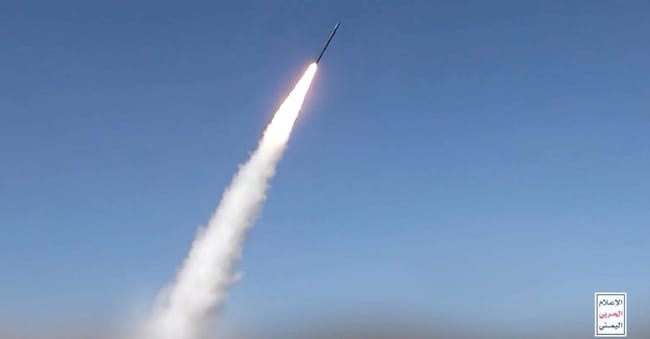
Un missile viene lanciato verso il bersaglio durante quello che gli Houthi yemeniti, allineati con l’Iran, definiscono un attacco alla città portuale di Mocha, sul Mar Rosso, nello Yemen, il 9 agosto 2026, in questa immagine tratta da un video diffuso dai media. Houthi Media Centre/via REUTERS

3' min read

Translated by AI
Versione italiana

3' min read

Translated by AI
Versione italiana

The Iranian threat may not be confined to the Middle East. If Donald Trump were to decide to escalate the war and strike at the Islamic Republic’s infrastructure, Tehran is reportedly considering possible attacks on US military targets, including those in Europe. This was revealed by the Financial Times, which cites sources close to the Iranian regime and points in particular to the south-east of the continent, with Bulgaria and Cyprus among the areas being considered for a possible retaliation.

Not all US bases, however, are equally vulnerable. The key factor is, in particular, their distance from Iran and, consequently, the range of the missiles available to Tehran. According to the Council on Foreign Relations, the Islamic Republic possesses the largest arsenal of ballistic missiles in the Middle East. Its longest-range systems are generally believed to have a range of around 2,000 kilometres, perhaps even more, which is sufficient to reach parts of south-eastern Europe and the eastern Mediterranean, but not enough to automatically bring all US installations on the continent within range.

Loading...

One of the most exposed outposts is Bezmer, in Bulgaria, an airbase also used to support the operations of American tanker aircraft. Further south, in the eastern Mediterranean, RAF Akrotiri—the large British base in Cyprus—is of particular importance, serving as a strategic hub for intelligence and reconnaissance activities and for operations in the Middle East.

Akrotiri has already been directly drawn into the conflict. In March, the base was struck by a an Iranian-made Shahed drone, causing no casualties and only limited damage. According to British and Cypriot officials quoted by Reuters, the drone was likely launched by Hezbollah from Lebanon. Subsequently, the British government also referred to the attack as having been carried out by a drone linked to an Iranian proxy.

The incident had occurred whilst London and Washington were discussing the use of British facilities. The Prime Minister Keir Starmer had initially ruled out the use of UK bases for US offensive strikes against Iran. London subsequently authorised Washington to use them for a purpose defined by the British government as ‘specific and limited’: to strike Iranian missiles in depots or at launch sites to prevent further attacks in the region. Trump had criticised the British position, arguing that the offer had come too late. The government in London also clarified that the drone targeting Akrotiri had been launched before the decision was announced.

However, the strategic Western network in the region is much more extensive. On Crete lies Souda Bay, an important base for the US Sixth Fleet in the Mediterranean. In Turkey is Incirlik, one of the main bases used by the US Air Force in the area. In Deveselu, Romania, Aegis Ashore is operational; this is the land-based component of NATO’s missile defence system, equipped with SM-3 interceptors designed to counter ballistic missiles, including those originating from the Middle East.

It is this network of air and naval bases, logistics centres and defence systems that enables the United States to sustain its operations across Southern Europe, the Mediterranean and the Middle East. And it is, above all, its easternmost part that is potentially within range of Iran’s arsenal.

To strike targets in south-eastern Europe, Tehran could in fact rely on medium-range ballistic missiles such as the Emad and Sejjil-2, which are said to have a range of close to 2,000 kilometres, as well as cruise missiles such as the Paveh. Iran also possesses long-range drones: according to the Council on Foreign Relations, the Shahed-136 can reach distances of up to around 2,000 kilometres, although their operational characteristics differ significantly from those of ballistic missiles.

The situation is different in Italia. The main US installations in our country are located approximately between 2,400 and 3,000 kilometres from north-western Iran and are therefore beyond the range normally attributed to Iran’s main medium-range missiles. These include Sigonella, in Sicily, which is vital for intelligence, surveillance and reconnaissance activities; Aviano, in Friuli-Venezia Giulia, an important US Air Force hub; and the US Army facilities in Vicenza.

To pose a direct threat to these targets, Iran would therefore need to possess systems capable of reliably exceeding the 2,000-kilometre threshold. One possibility is the Khorramshahr, which some assessments suggest, with a lighter warhead, has a potential range in the order of 2,500–3,000 kilometres.

Loading...

It is, however, precisely over these ranges that the uncertainties increase. Iran’s capabilities are far less well documented than those of the missiles intended to strike targets in the Middle East and south-eastern Europe, and there is no reliable public data on the number of missiles actually available and capable of operating at such ranges.

Copyright reserved ©
Loading...

Brand connect

Loading...

Newsletter

Notizie e approfondimenti sugli avvenimenti politici, economici e finanziari.

Iscriviti