
Shahed, what Iran's drones are and how they work
Low-cost aircraft difficult to intercept: they are undermining the most sophisticated air defence systems

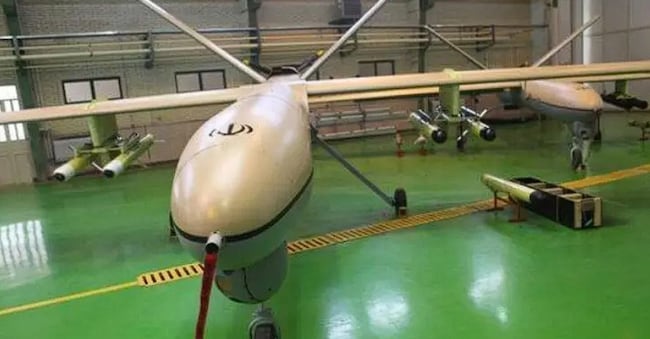
Shahed means 'witness' in Persian. And in Shia religious language it is a word that is associated with martyrdom. A shahed is a martyr. A suicide bomber. That is why Iranian drones are called that. Because they are kamikaze drones: they are launched towards a target and detonate on impact. In recent years, they have become one of the most effective military tools developed by Iran.
And today, in this new war, they are the absolute protagonists of Tehran's counteroffensive.
The most popular model is the Shahed-136. It is about 3.5 metres long, has a wingspan of just over 2 metres and weighs less than 200 kilos, the weight of a medium-sized motorbike. The peculiarity is in the warhead, which usually contains 40-50 kilos of explosives. A Shahed-136, once the GPS coordinates have been set before taking off, can hit targets up to 2,000 kilometres away. And it often hits them without interference.
It flies at rather low speeds, compared to a missile. It moves slowly, often at low altitude, with a small propeller engine. Its sound is that characteristic of drones (the word drone in English means buzzing). Yes, a continuous buzzing sound, which has led many soldiers in Ukraine to call it a 'flying moped'.
The decisive point, however, is the cost. Because Shaheds cost as much as a utility car.


