
Income tax set to rise to 33 per cent on earnings up to 60,000 euros. Here’s who will save what
The maximum tax saving could amount to around one thousand euros a year, excluding additional variables and deductions. The number of taxpayers affected may vary depending on the choices made regarding the income thresholds at which the effect is to be neutralised

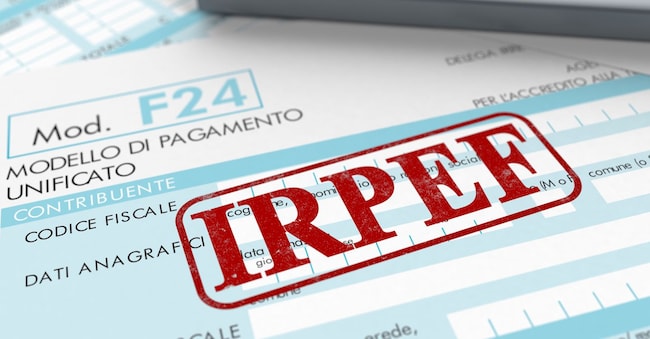
For now, it is a political commitment: a strong one. And a figure to be met: 2.7 billion. The 2027 budget, the one at the end of the parliamentary term, also aims to highlight another reduction in personal income tax as one of its key achievements. Following the measures to tackle the tax wedge – the move from four to three tax rates (initially for one year and then made permanent), with the consolidation of the first tax bracket up to 28,000 euros and the reduction of the second tax rate from 35 per cent to 33 per cent – the aim now is to extend the second tax bracket (at 33 per cent) from 50,000 to 60,000 euros.
Affected taxpayers
Let’s start with a premise: as long as this remains a technical hypothesis, we can only discuss it in general terms. So how many taxpayers might be affected? Between 50,000 and 60,000 euros of declared income (it is always worth noting this, given the prevalence of tax evasion in Italia); according to the latest tax statistics, there are just over one million taxpayers in this bracket. However, due to the structure of the IRPEF (personal income tax), taxpayers earning over 60,000 euros would also benefit from this further extension. This means that, without a cap, up to 3.3 million taxpayers could benefit from the measure. In fact, even those earning over 60,000 euros would see part of their declared income (specifically the portion between 50,000 and 60,000 euros) no longer taxed at the highest rate of 43 per cent, but instead taxed at the lower rate of 33 per cent.
How much can you save?
And now let’s turn to the aspect that matters most to Italian taxpayers. But how much can you save? Let’s take a look at the range of declared incomes, bearing in mind that, for the time being, this is a discussion without specific regulations to hand and without taking into account the ‘specific circumstances’ of individual taxpayers. These are therefore gross figures that do not take into account potential additional tax savings, which may arise, for example, from the use of tax deductions for eligible expenses. In any case, it should not be forgotten that, moving from theory to reality, one must also factor in the impact of municipal and regional surcharges on personal income tax (IRPEF), which alter the final figure. From an income of 51,000 euros, you start to save 100 euros a year, simply due to the linear effect of the tax bracket widening. At 52,000 euros, this rises to 200 euros, and so on: in practice, a saving of 100 euros for every 1,000 euros of income up to 60,000 euros. At this income threshold, the maximum saving is 1,000 euros a year, which works out at around 77 euros calculated over 13 monthly instalments. And from 60,000 euros onwards, the tax saving stabilises at 1,000 euros. Naturally, €1,000 on an income of €60,000 is not ‘worth’ the same as when you have an income of €100,000. At 60,000, in fact, the savings represent 1.7 per cent, whilst at 100,000 they represent just 1 per cent; as income rises, the proportion decreases until it is almost negligible.
Sterilisation
This is why one possible solution involves neutralising the tax savings. As was, in fact, the case with the 2026 Budget Law, which effectively ruled out the effects of the tax rate reduction from 35 per cent to 33 per cent for those with incomes exceeding 200,000 euros. In practice, for those above this threshold, the amount of the deduction from gross tax has been reduced by €440, calculated by taking into account the reductions that apply above €75,000 and are linked, based on coefficients, to the number of household members, in relation to the following expenses: expenses for which the deduction rate is set at 19% under the Consolidated Income Tax Law (Tuir) or any other tax provision, with the exception of healthcare expenses; donations to political parties which are deductible from income tax at a rate of 26 per cent, for amounts between €30 and €30,000 per year; insurance premiums for natural disaster cover.
Who knows, perhaps this could be the way forward on this occasion too. Not least because, by extending sterilisation to an even younger age group, we might be able to scale back the estimated coverage requirements somewhat. In this way, the estimated number of taxpayers affected is also bound to change.


