Facilities

Isee, personal and income errors: 1.7 million false declarations

Incorrect data for 640,000 files on income and assets, and 1 million on personal data

by Michela Finizio and Gianni Trovati

Adobestock

2' min read

Translated by AI
Versione italiana

2' min read

Translated by AI
Versione italiana

The automatic acquisition of Isees by municipalities, schools, universities and other bodies granting benefits, processed online in pre-filled form or through Cafes, does not only serve to make life easier for citizens.

Among the objectives, made explicit in the illustrative report of the draft decree on the NRP that intends to introduce the novelty, is that of 'making control activities more cogent and effective in order to prevent people from obtaining benefits to which they are not entitled'.

Loading...

And the numbers of verifications made possible by the cross-referencing of the new databases in the hands of the Inps show well the extent of the problem.

The numbers

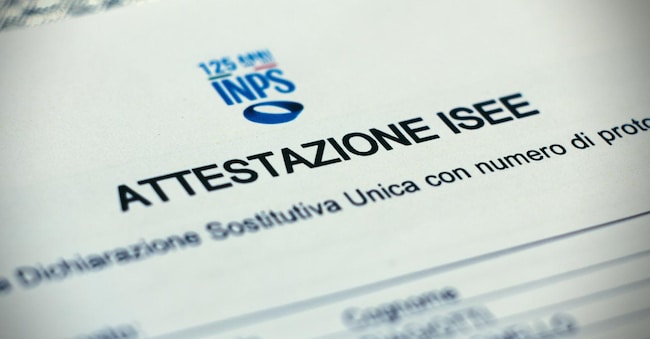
In 2025 there were 11,600,608 of Isee in all, +9.2% on the previous year, probably also fuelled by the new exemption of BTp up to EUR 50,000 in operation since last April.

Checks on the income and assets data declared in the Isee 2025 revealed 640,718 certificates vitiated by 'discrepancies' that had not been remedied as at 31 December.

Moreover, an initial check-up on the National Register of Resident Population (ANPR) revealed 1,069,314 Isees with a household composition different from the actual one: in a trend likely driven by the fact that, for example, 'moving' an adult child to another home on paper helps to lower university fees.

Total: 1.7 million indicators 'unfaithful' to reality.

Simplification

The Pnrr decree thus accelerates a revolution already initiated by the last Budget Law: once the certificate has been obtained after submitting the Dichiarazione sostitutiva unica (Dsu), the Isee will no longer have to be transmitted to universities, municipalities or other entities that, on the basis of the indicator, modulate tariffs or recognise benefits; because the PA will be required to acquire them independently.

The Pillar

The pillar around which the new rule revolves, destined to enter into force immediately after the approval of the decree expected in the Council of Ministers by the end of the month, is the National Digital Data Platform (Pdnd).

Conceived with the simplification decree of 2020 and animated by the NRP with 556 million euro, the platform is in practice a unified catalogue of the data held by the various public administrations, and serves to translate into practice the 'once only' principle: that is, the much-stated but so far little-practised constraint that prohibits public bodies from asking citizens for data and information that the public administration as a whole already possesses.

Now that the platform, thanks to the NRP, brings together more than 9,000 entities and 13,521 digital services, the time is ripe to really take action.

Interoperability between the databases, and this is the other key point, will also enable other bodies that provide benefits or services modulated on the basis of the Isee to carry out checks, which are essential to curb fraud, definitively closing the doors to the increasingly widespread self-declarations.

Copyright reserved ©
Loading...

Brand connect

Loading...

Newsletter

Notizie e approfondimenti sugli avvenimenti politici, economici e finanziari.

Iscriviti