
Israel: Arab parties ready to back Eisenkot
The Arab parties want to make their voices heard. And if the idea of a unity government does not come to fruition, the only way forward lies with them. The alternative is another round of elections. Yet another one
from our correspondent Roberto Bongiorni
 Aggiungi Il Sole 24 Ore
ai preferiti su Google
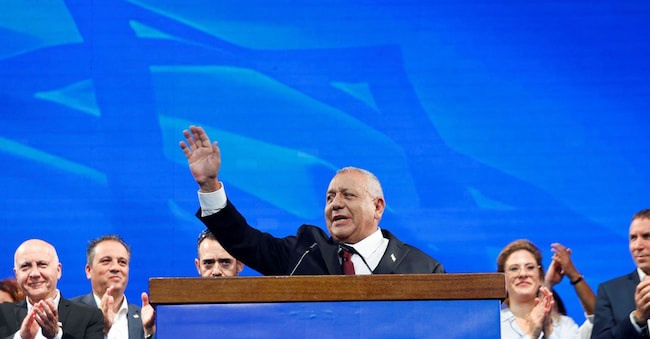
TEL AVIV – When the chance to bring Benjamin Netanyahu’s reign to an end is on the line, even political alliances once deemed almost impossible become viable options. Until Tuesday 27 October, election night, the Israeli opposition leader Gadi Eisenkot had always rejected any alliance with Arab parties. His coalition, however, failed to secure enough votes to form a government. Since then, whilst being careful not to commit himself too fully, he has hinted that he would not rule out external Arab support for a minority government.
Ready for external support
The same applies to the Israeli Arab parties. Buoyed by their historic success – 19 seats – even those furthest removed from the stance of the Jewish parties have shown a willingness to engage. Ahmad Tibi, leader of Ta’al, one of the three parties in the Joint List, said yesterday on Israeli radio station Kan Reshet Bet: ‘The Joint List wants to help replace this government (Netanyahu’s, ed.) and pave the way for an alternative government. That is why we are reaching out to the “change bloc”. I hope it has enough courage to capitalise on the numbers.” Tibi clarified that the Joint List parties would also be prepared to provide external support. “We could support an alternative government from the outside, without being part of it,” Yousef Jabareen, leader of the Joint List, later told AFP.
Mansour Abbas, leader of Ra’am, the other, more pragmatic Arab party, had already indicated his willingness to support Eisenkot. “I will decide whether to accept the criteria set out by Eisenkot once I know whether there is a possibility of forming a government.”
The Arabs therefore have what it takes to tip the balance. But this balance is a hot potato. It is frightening, especially to the more right-wing opposition parties.
There are traditionally four Israeli Arab parties: Hadash, a socialist left-wing party advocating Jewish-Arab coexistence; Ta’al, a nationalist party committed to defending the rights of Israeli Arabs; Balad, a secular Palestinian nationalist party; and Ra’am, a moderate and pragmatic Islamist party. In 2021, they won 10 seats in the Knesset: 6 for the Hadash-Ta’al-Balad Joint List and 4 for Ra’am. It was a historic turning point: for the first time, an Arab party, Ra’am, supported an Israeli government – that of Bennett and Lapid – which lasted one year. In 2022, the number of seats remained at 10: 5 for Hadash-Ta’al and 5 for Ra’am. Balad stood alone. It failed to exceed 3.25 per cent.


