
Automotive boosts industrial production: +0.1% in February
Year-on-year +0.5% but zero growth in the first two months. Vehicles +10%, rebounding from lows. Chemistry and Fashion hurt.

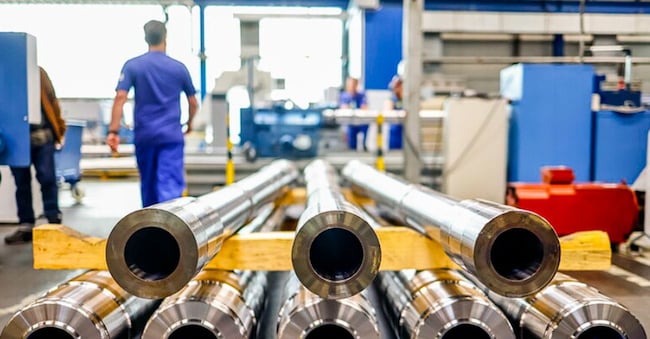
For once the driving force is the car. With a growth of 10% compared to the same month in 2025, the motor vehicle sector is the best in terms of industrial production in February, supporting an overall average that nevertheless remains asphyctic.
In fact, Istat records an advance of one decimal point over the previous month, half a point on an annual basis. The balance of the first two months of the year is a sad draw, probably destined to worsen with the data for March, the climax month of the war unleashed by the US and Israel in Iran.
Among the sectors, electronics, machinery and pharmaceuticals also grew with solid percentages, while the worst sector was chemicals (-6.8) and wood and fashion also fell noticeably.
Rebounding, as mentioned, is above all the car industry, recovering from the production lows reached last year. Fim Cisl estimates that in the first quarter Stellantis recorded production of 120 thousand units (+9.5%), with cars (just under 74 thousand) up by 22%. The hypothesis, points out the union, is to reach 500 thousand vehicles produced at the end of the year, with cars over 300 thousand, up from 238 thousand in 2025, the lowest value since the mid-1950s.
The economic climate remains mixed, with numbers hovering in the various surveys. The latest qualitative data, for example, indicate, unexpectedly in the light of events, a non-dramatic general climate. With the Pmi manufacturing index in March at its highest level in the last three years and above 51 (i.e. above the 50 threshold that separates growth from contraction), while against a net drop in household confidence recorded by ISTAT, there was a positive sign for manufacturing companies in March.The climate in Europe is not particularly bright in any case, starting with the data from Germany, which continue to be mixed and partly contradictory. For while manufacturing orders and exports in February were in positive territory (+3.5% and +2.9% respectively on an annual basis), industrial production was down by 0.3% per month and unchanged compared to February 2025, in both cases below expectations, thus distancing the hypothesis of a rapid recovery in the continent's largest economy. In the first three months of the year, car production declined by 2% to 1.1 million units (February +1%). However, the medium-term effects of the conflict in the Middle East, the actual resolution of which still seems to have to be assessed. In particular, the dragging effect on energy prices will be decisive: Bankitalia, which has already revised down its 2025 estimates for Italia's GDP (+0.5% from +0.6% in December), assumes zero growth if oil were to rise to USD 150 per barrel this year. Zero growth is also estimated by Confindustria in the intermediate scenario hypothesised, with a war lasting until June. And the government itself, as Economy Minister Giorgetti explained yesterday, is preparing to take note of the new exogenous shock, revising the country's growth estimates downwards.


