

Is it possible to make your home safe for children? Here are some tips to reduce the risks
The team of doctors and fact-checking experts from the National Medical Association addresses the main health concerns

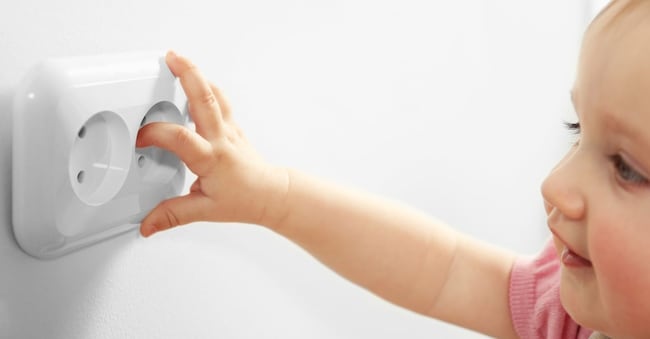
Key points
- How common are accidents at home among children?
- Do the risks change as the child gets older?
- Are home safety measures, such as baby gates and socket covers, really necessary?
- What practical measures should you take at home?
- What else can be done to prevent falls?
- What should you do if, despite taking precautions, your child hurts themselves or swallows something dangerous?
The home is where children spend most of their time, but it is not automatically a safe environment: it is designed to meet the needs of adults, not the curiosity and unpredictability of young children. Falls, burns, poisoning and choking remain among the most common reasons for paediatric A&E visits. The good news is that most of these accidents can be prevented with simple precautions, the effectiveness of which has been proven by scientific studies. Here are the most frequently asked questions on the subject.
How common are accidents in the home among children?
According to a 1999 ISTAT survey, 3,672,000 domestic accidents occur in Italia every year, involving a total of around 3,048,000 people, of whom around 68,000 are children. Even the most recent figures confirm that this is by no means a marginal phenomenon: every year, around 20,000 children and young people visit the two A&E departments at the Bambino Gesù Paediatric Hospital in Rome following an injury; of these, over 8,000 suffer a fracture, nearly 7,000 suffer bruises, sprains or dislocations, and 4,000 suffer a head injury, according to figures for 2025.
Do the risks change as the child gets older?
Yes. According to the guide produced by the Istituto Superiore di Sanità, injuries and the accidental ingestion of hazardous substances are more common in children under the age of 4 – the age at which they begin to move around independently and explore objects by putting them in their mouths. Data from the Bambino Gesù Hospital confirm that head injuries mainly affect children under the age of 6, accounting for around three in four cases, whilst fractures mainly affect children aged between 6 and 14, accounting for over 70 per cent of cases. As regards poisoning, children aged between 1 and 4 are most at risk, as they are able to reach products and substances on their own, unscrew the caps and put them in their mouths; the substances most commonly involved are cleaning products, medicines and insecticides.
Are home safety measures, such as safety gates and socket covers, really necessary?
A systematic review from the Cochrane Library analysed 80 studies, including 23 randomised controlled trials (which are, in theory, the best type of study as they allow a cause-and-effect relationship to be established) on the effectiveness of home safety education programmes, with or without the provision of safety devices. The results show that these interventions statistically significantly increase the likelihood that households will have hot water set to a safe temperature, working smoke alarms, a fire escape plan, medicines and cleaning products stored out of children’s reach, stair gates installed on staircases, and socket covers on unused sockets. Interventions that provided safety devices free of charge or at a reduced cost were more effective than education alone. It must be said in all honesty that the authors of the review did not find sufficient evidence to establish with certainty whether these interventions also reduce the actual number of accidents, and not just the adoption of safe behaviours: further studies are needed to answer this question. A more recent systematic review, published in 2025, confirms that home safety programmes aimed at parents of newborns and infants generally have positive effects on safety behaviours, and suggests that they are more effective when they address several risk areas together, rather than just one issue at a time.
What practical measures should you take at home?
The main Italian institutional sources suggest a number of simple measures to take, categorised by area of the home. These are the main ones: protect electrical sockets and the corners of furniture with suitable safety devices; keep medicines, cleaning products and insecticides out of children’s reach, preferably under lock and key, always in their original packaging, without transferring them to other containers; keep objects with a diameter of less than 4 cm, such as buttons, batteries, coins and marbles, away from children due to the risk of choking, as well as objects with which they could injure themselves, such as knives, scissors, nail files and razor blades; pay particular attention to button cells, which are increasingly common in toys, remote controls and other small devices: if they become lodged in the oesophagus, they can cause chemical burns to the tissues within a few hours, even when the child shows no obvious symptoms; they must therefore be kept out of children’s reach, ensuring that the battery compartment can only be opened with a screw or a tool, and in the event of confirmed or suspected ingestion, you must go straight to A&E without inducing vomiting. Furthermore: securely anchor any unstable furniture to the wall to prevent it from tipping over and crushing the child; in the kitchen, turn the handles of saucepans towards the wall and use the innermost hobs; never leave your child alone whilst cooking; ensure the oven door is made of heat-insulating glass and avoid tablecloths that hang down too far from the table; in the bathroom, never leave your children alone in the bath due to the risk of drowning; use non-slip mats in the bath and keep only the absolutely essential electrical appliances, placing them on shelves or inside cupboards that are out of reach of young children.

