Climate

Third heatwave in Italia: temperatures of up to 39 degrees in the Po Valley and a health alert from the WHO

Record temperatures are affecting Italy and Europe, with public health emergency measures and monitoring plans in place to protect the population from the extreme heat

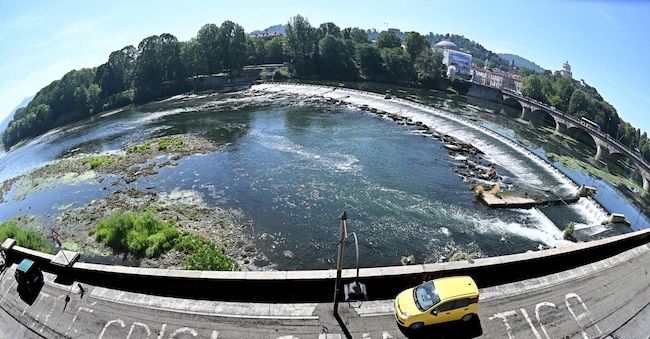
Fiume Po in secca ai Murazzi e terreni agricoli aridi dopo il caldo torrido, Torido, 8  luglio 2026. ANSA/ ALESSANDRO DI MARCO ANSA

2' min read

Translated by AI
Versione italiana

2' min read

Translated by AI
Versione italiana

“More deadly weeks could lie ahead for Europe.” The World Health Organisation has sounded the alarm. Following the heatwaves at the end of May and in the second half of June, Italia is now facing its third heatwave of the year. From today, temperatures of up to 38 degrees are forecast in the Po Valley – with peaks of 39 degrees in Emilia and southern Lombardy – and by the weekend, 40 degrees in Oristano and 39 degrees in Puglia and Tuscany as well.

Orange stickers

Today in Italia, the number of cities on ‘orange alert’ – the second level of alert, which indicates weather conditions that pose a potential risk to public health – is rising sharply, bringing the total to ten: Ancona, Bologna, Brescia, Florence, Milan, Perugia, Pescara, Turin, Venice and Verona.

Loading...

On Thursday, however, the number of orange alerts will fall to three (Perugia, Pescara and Turin), but a red alert is forecast for Florence, which is set to experience maximum apparent temperatures of up to 37 degrees tomorrow.

Europe

However, extreme temperatures are not affecting our country alone. According to Hans P. Kluge, Director-General of WHO Europe, “the next heatwave is already forming over the Atlantic. Temperatures of up to 43 degrees are forecast for Portugal and southern Spain this week. France and the Benelux countries are bracing for another heatwave. Some parts of Central Asia are sweltering in temperatures of 40 degrees’.

The situation is particularly critical in Spain, where, according to the State Meteorological Agency (Aemet), temperatures reached 44 degrees in Aragon, Catalonia and the Valencian Community, and exceeded 42 degrees in Seville, Córdoba, Jaén and Huelva in the southern region of Andalusia, in Badajoz in Extremadura, and in Ciudad Real in Castile-La Mancha.

Emergency meeting

To tackle the emergency, Kluge convened a meeting with 41 countries and the European Commission. In the final statement, the Director of WHO Europe emphasised that ‘the meeting clearly demonstrated how countries are taking the extreme heat seriously, treating it as a genuine public health emergency rather than merely a meteorological phenomenon’.

Considerable attention has been paid to the measures adopted by European countries to protect the health of their citizens. “Health action plans for heatwaves save lives. Countries with such plans have responded promptly, coordinating effectively between the various stakeholders involved and providing the best possible protection for the population,” said Kluge, who also cited Italia as a positive example: “The Italia mortality surveillance system, operational in 45 cities, is able to provide decision-makers with data in near real time throughout the duration of the crisis.”

Copyright reserved ©
Loading...

Brand connect

Loading...

Newsletter

Notizie e approfondimenti sugli avvenimenti politici, economici e finanziari.

Iscriviti