
Italia food follows fashion: 36% of customers worldwide are willing to pay more for it (44% in fashion)
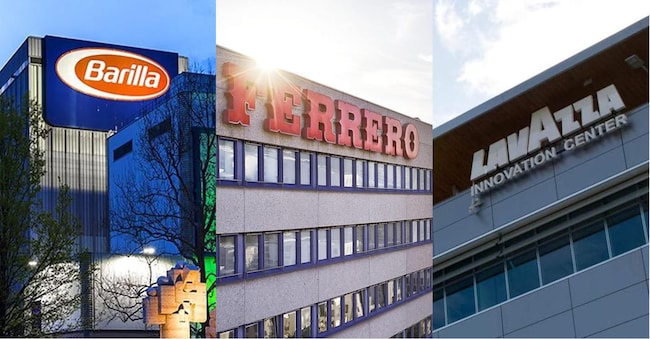
Among the top brands Barilla, Lavazza and Ferrero. Research by Eumetra for Pulse Advertising: social media are the drivers of success

Key points
Barilla joins Armani. Ferrero joins Ferrari. In the way consumers halfway around the world perceive Made in Italy, food brands have conquered a place alongside fashion brands. This is what emerges from the research "Made in Italia in the Social Media Age", commissioned by Pulse Advertising to the Eumetra institute on 2,541 consumers in the USA, the UK, Germany, France and China (survey of August 2025): 36% of those interviewed say they are willing to pay more for Italian food, against 44% who would do so for fashion. A gap that has narrowed so much that it is redrawing the geography of the value of Made in Italia in the world.
Surprise from China and Germany
The most resounding number comes from Beijing. 93% of Chinese consumers say they are willing to pay more for Italian products - including food - compared to 65-74% in Western markets. "I honestly did not expect such a high number," admits Paola Nannelli, global ceo of Pulse Advertising. "China is almost 20-25 points above other Western markets." It should be noted that the research measures the declared willingness to pay a premium, not its magnitude: a propensity figure, not an economic estimate.
'In Germany,' continues Nannelli, 'the overtaking has already taken place: 70% of Germans would pay more for a Made in Italia product in general, and 43% would do so specifically for Italian food, overtaking sectors such as jewellery. In the USA, the share stands at 40%'.
The social media vector
And it is social media that are the main vector through which Made in Italy enters the homes - and heads - of foreign consumers. Indeed, the latter claim that social media have helped them discover new brands and push them to buy Italian products: 91% of Chinese, 64% of Americans, 58% of Germans and British, 57% of French. In global feeds, food is the second most represented sector with 31%, right after fashion at 48%. In China, one in two (46%) claim to have got to know Made in Italy brands through social media.
In China, 58% of consumers consider influencers more effective than official brand channels (54%) in telling the story of Made in Italy. 83% of Chinese say they trust creators, compared to 56-57% in the West, and 94% say their content influences purchasing decisions. According to Alberto Stracuzzi, market research director at Eumetra, consumers attribute three roles to creators: guarantors of quality and authenticity (60% in China, 31-46% in the West), storytellers of the real Italia, and ambassadors of the Italian lifestyle. "When a creator shows verifiable provenance and rituals of use," explains Nannelli, "the content becomes the trust layer that justifies premium pricing.

