

Mammograms: a record 77 per cent in Italy, but the figure plummets to below 50 per cent in Calabria
Vaccination uptake has picked up again following the pandemic, but the North-South divide remains, with Emilia-Romagna, Veneto and Umbria leading the way: figures from the National Institute of Health

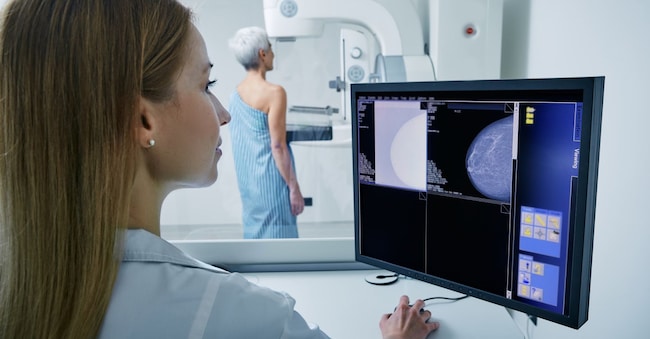
This is the highest figure since 2008: in Italia, 77 per cent of women aged between 50 and 69 have undergone a preventive mammogram within the recommended timeframe, but uptake of the procedure varies significantly across regions, with a clear north-south divide. This is confirmed by data from the ISS’s Passi Surveillance Programme for the two-year period 2024–2025, which shows that the figure has nevertheless reached its highest level since 2008.
57 per cent in ASL programmes
The majority of women took part in the screening programmes offered by the Local Health Authority (57 per cent), whilst the remainder did so of their own initiative (19 per cent). The overall take-up of mammography screening, both within and outside organised programmes – which has been rising in recent years following the decline caused by the pandemic – shows significant regional differences, with a clear north-south divide.
The North-South divide
Total coverage rates of close to 90 per cent are recorded in regions such as Emilia-Romagna, Veneto and Umbria (where the vast majority of women take part in organised screening programmes), whilst in some southern regions total coverage falls below 50 per cent, as in Calabria (where participation in organised programmes falls significantly). Over time, however, the proportion of women undergoing preventive mammograms has increased throughout the country, thanks mainly to the expansion of organised programmes and greater uptake of these schemes. Screening on an individual’s own initiative has remained stable over time, but has declined in areas where organised programmes are well established.
9 per cent have never taken the test
‘It is worth noting,’ the researchers emphasise, ‘that a significant proportion of women aged 50–69 have never had a screening mammogram (9 per cent) or have had them at less than optimal intervals (14 per cent reported at the time of the interview that they had last had a screening mammogram more than two years previously). The social gradient is wide and persistent over time; women with lower levels of education or financial difficulties, as well as foreign nationals, are less likely than others to undergo screening, but organised screening reduces these inequalities.”

