

Italia takes over the chairmanship of the EU Strategy for the Adriatic and Ionian Region
A plenary session was held to mark Italia’s year in the chair of EUSAIR, attended by Ministers Tajani and Foti, Commissioner Fitto and the initiative’s Secretary-General, Ambassador Castellaneta. The agenda centred on five pillars: the blue economy, connectivity, protection of the marine environment, the development of sustainable tourism and social cohesion.

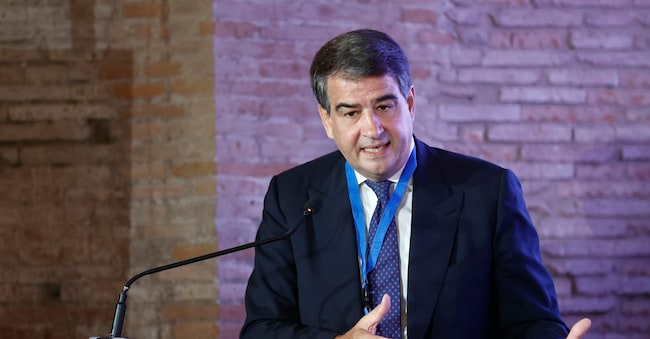
Italia’s presidency of the Adriatic-Ionian Initiative (IAI) and the EU Strategy for the Region (EUSAIR) has officially begun: an event at which the roadmaps, objectives and priorities were set out for a term of office that will run until May 2027. Rome is taking the helm of the Strategy at a delicate time for the region, marked by a complex interplay of profound geopolitical transformations, the accelerating climate crisis and pressure on ecosystems, but also by a renewed push for enlargement that has returned with force to the centre of the EU agenda. The EUSAIR is one of the EU’s macro-regional strategies designed to strengthen economic, social and territorial cohesion, and brings ten countries together around the same table: Croatia, Greece, Italia and Slovenia as Member States; Albania, Bosnia and Herzegovina, Montenegro, North Macedonia and Serbia as candidate countries; and San Marino. At the heart of the agenda are five key pillars. The blue economy, linked to activities relating to the development of maritime governance, fisheries management and marine resources. Connectivity along both transport and energy supply chains. The third pillar is the protection of the marine environment and the reduction of various forms of pollution. The fourth pillar is the development of sustainable tourism. Finally, social cohesion, with a particular focus on youth employment.
What is EUSAIR
The multi-level governance mechanism underpinning the Strategy brings together national authorities, civil society, academia, businesses and young people in a concerted effort to ensure its effective implementation. The inaugural meeting, held last Tuesday 28 July, was attended by the Executive Vice-President of the European Commission and Commissioner for Regional and Cohesion Policy, Raffaele Fitto; the Minister for European Affairs, Tommaso Foti, the Deputy Prime Minister and Minister for Foreign Affairs, Antonio Tajani, the Secretary-General of the IAI, Ambassador Castellaneta, the Secretary-General of Unioncamere, Giuseppe Tripoli, and the EUSAIR Governing Board, as well as administrative representatives from the member countries, the Italian ambassadors to their respective states, and other representatives from the European Commission and the Managing Authority for European territorial cooperation programmes in the region.
The growing importance of the Strategy was emphasised by Raffaele Fitto, who commented that ‘the issue of addressing regional disparities and upholding the principles of cohesion policy is more crucial than ever, precisely because this strategy involves a greater number of participating countries that are not members of the European Union, with whom one of the key priorities is to work, within the context of enlargement, to strengthen administrative capacity and ensure respect for the rule of law’.
The priorities of the rotating presidency
The document published by EUSAIR on the Italian Presidency’s programme identifies four main priorities: European integration and the strengthening of regional administrative capacity; connectivity, security and territorial integration; social, cultural and demographic cohesion; and the strengthening of value chains and the SME network to promote territorial cohesion. During its term, Italia also aims to promote the signing of a Memorandum of Understanding between the ministers responsible for European funds within the EUSAIR, with the aim of facilitating political dialogue and accelerating the achievement of the set objectives. Michele Palma, Head of the Department for Cohesion Policies, stated that ‘our approach will be to raise awareness amongst programme managers to fund the concrete ideas that will emerge from the debate during the Italian Presidency’, he concluded, ‘This is the practical focus of our programme of activities for the Italian Presidency’.
Work on the widening
The agenda of the new presidency therefore appears, right from the start, to be characterised by a strong focus on the issue of enlargement: the stated aim is to bridge the gap between Member States and candidate countries, whilst at the same time working on connectivity – from transport and energy networks to the reduction of socio-economic inequalities – to support the competitiveness of regional development. The objectives of the Italian presidency are directly intertwined with this drive, as emerged repeatedly in the day’s speeches, in a context which this year lends the Adriatic-Ionian Initiative even greater political weight. ‘The accession of the Western Balkans to the Union’ could be ‘the most politically significant issue’, stated Tommaso Foti, adding that this is a priority which ‘Italia is certainly well aware of and has articulated with the utmost clarity in every forum’. Along the same lines, Antonio Tajani described the EU Strategy for the Adriatic-Ionian Region as “an important tool for promoting cooperation, growth and the well-being of a region that is a priority for the government”, emphasising that the Balkans represent an “integral part of our foreign policy”.

