Healthcare

Italia tops the European rankings for West Nile virus cases: 590 out of a total of 1,285 in 2026

In 2026, Italia is at the forefront of the spread of West Nile fever in Europe, with numerous areas affected and clear guidance on prevention and the symptoms of the disease.

3' min read

Translated by AI
Versione italiana

3' min read

Translated by AI
Versione italiana

The figure is rising and, within Europe, Italia holds a far from welcome record: it ranks first in terms of cases of West Nile fever. Of the 1,285 cases recorded across the 15 countries, Italia has recorded 590, followed by Greece with 319 and Spain with 104. These figures are taken from the 10 September update by the European Centre for Disease Prevention and Control (ECDC).

Italia in the lead

Since the start of the 2026 transmission season, and as at 10 September, 161 areas affected by West Nile virus have been identified in 15 countries across Europe. These areas are located in Italia (64), Greece (21), Romania (20), France (14), the Netherlands (10), Serbia (7), Croatia (5), Spain (5), North Macedonia (4), Hungary (3), Austria (2), Germany (2), Albania (1), Cyprus (1) and Kosovo (1).

Loading...

This week, 16 areas have been reported as affected for the first time this season.

Cases in other countries

Then there are cases with significantly lower figures. At the top of the table is Romania with 77 cases, followed by North Macedonia, where there were 57 cases. Lower figures were recorded in France, with 49 cases, and Serbia, with 37. In the Netherlands there were 19 cases, whilst in Croatia and Cyprus there were 10 each. In Austria there were 5, in Hungary 4, in Germany 2, and one each in Albania and Kosovo.

Record set in Padua

Looking at the figures for the whole country, there were 50 cases in Padua, 48 in Milan, 46 in Rome, 34 in Latina, 30 in Turin, 25 in Oristano, 22 in Caserta, 21 in Cremona, 18 in Novara and 17 in Mantua.

How is it transmitted?

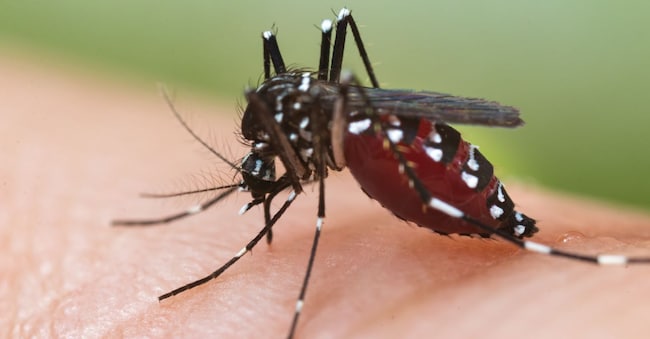
The West Nile virus is transmitted to birds through mosquito bites. ‘Humans and mammals can also be infected, although around 80 per cent of human infections are asymptomatic,’ he points out. Most cases in humans occur between July and September, when mosquitoes are active.

“Around 20 per cent of WNV infections in humans can cause West Nile fever,” the ECDC points out, “which is characterised by headache, malaise, fever, myalgia, vomiting, rash, fatigue and eye pain.”

Not only that: ‘Less than 1 per cent can cause West Nile neuroinvasive disease (WNND), which affects the nervous system. The mortality rate amongst people who develop WNND can be as high as 17 per cent. WNV is usually transmitted to humans by infected mosquitoes’.

Incubation

The incubation period from the moment of the bite by the infected mosquito varies between 2 and 14 days, as highlighted by the ISS (National Institute of Health), but can be as long as 21 days in people with compromised immune systems.

What to do

“There is no vaccine for West Nile. Vaccines are currently being researched, but for the time being, prevention mainly involves reducing exposure to mosquito bites – as emphasised by the ISS. It is therefore advisable to protect yourself from bites and prevent mosquitoes from breeding easily by using repellents and wearing long trousers and long-sleeved shirts when outdoors, especially at dawn and dusk; fitting mosquito nets to windows;

Loading...

frequently emptying flower pots or other containers (such as buckets) containing standing water; changing the water in pet bowls frequently; keeping children’s paddling pools upright when not in use’.

Treatment

There is no specific treatment for West Nile fever. ‘In most cases, the symptoms disappear on their own after a few days or may persist for a few weeks. In more serious cases, however, hospitalisation is required, where treatment includes intravenous fluids and assisted ventilation.’

Copyright reserved ©
Loading...

Brand connect

Loading...

Newsletter

Notizie e approfondimenti sugli avvenimenti politici, economici e finanziari.

Iscriviti