
Tax returns: in Italia, one in four taxpayers seeks professional help
Among the 27 EU Member States, our country tops the list: 25 per cent compared with the EU average of 8 per cent. Slovakia, Greece and the Czech Republic follow

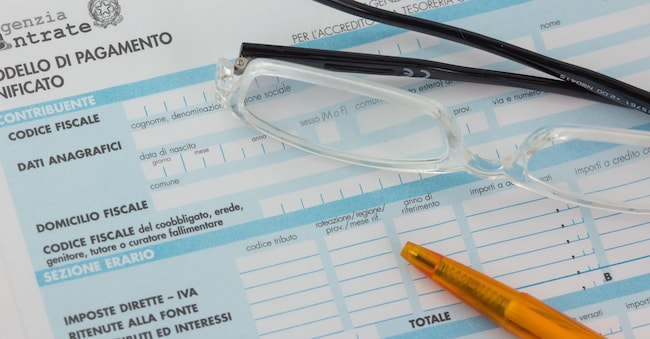
Italia is, amongst the 27 Member States of the European Union, the country where people rely most on professionals to complete their tax returns: 25 per cent compared to the EU average of 8 per cent. High percentages are also recorded in Slovakia (19 per cent), Greece (18 per cent) and the Czech Republic (15 per cent). This is revealed in the ‘Annual Taxation Report’ for 2026, published on 8 July 2026.
The figures
At European level, self-employment – as the report explains, citing data from a Eurobarometer survey – increases the likelihood of using the services of a professional by 3.6 percentage points, whilst being a woman increases it by 0.9 percentage points. Living in a large city, on the other hand, reduces the probability by 1.1 percentage points. Another significant factor is age: for every year that passes, the probability increases by 0.6 percentage points. A self-employed person is six percentage points more likely to consider completing their tax return difficult, but is also likely to perceive taxation as fair. In fact, the self-employed are 2.3 percentage points more likely to consider the system fair and are 3 percentage points more likely to consider the support available for completing their tax returns to be adequate.
According to the report, these empirical findings are consistent with the hypothesis that ‘involvement in procedures fosters the perception of institutional legitimacy, even when the burden of compliance is high’. At the same time, being self-employed reduces the likelihood of viewing the fight against tax avoidance and tax evasion by 10.6 percentage points.
Capital income
An even greater impact is exerted by investment income, which reduces the probability by 16.1 percentage points. Receiving a pension and living in a large city rather than in a rural area increase the perception that combating tax evasion and avoidance is an EU priority by 3.2 and 3.7 percentage points respectively. Respondents on low incomes ranked this lower on the list of EU priorities than those on high incomes.
Source of income
Studies, however, show that attitudes towards taxation are influenced more by the source of income than by the amount of that income. The amount of income leads to different perceptions of the complexity of completing a tax return and to different priorities being assigned to the fight against tax evasion and avoidance. However, the source of income is a significant variable in several evaluation models and has a greater impact.

