Export

Italian tomatoes to conquer Australia, which does not confirm anti-dumping measures

Closing the preliminary phase of the investigation launched by Canberra at the instance of Spc (Ardmona) into De Clemente Conserve, Imca and Mutti

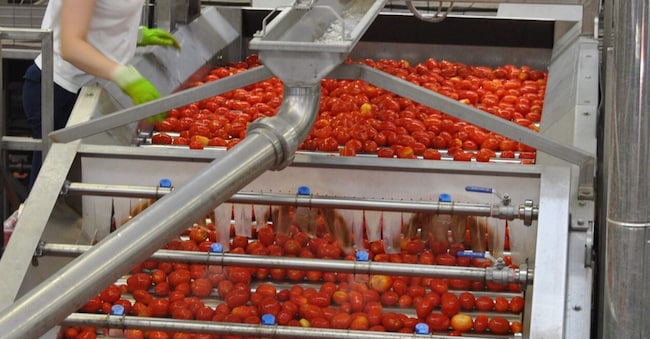
by Silva Marzialetti

L’Italia è seconda solo alla cina per la lavorazione del pomodoro da industria

2' min read

Translated by AI
Versione italiana

2' min read

Translated by AI
Versione italiana

Italian tomatoes continue to erode Australian market share, shaping demand from consumers sensitive to the quality and low prices of Italian-made products, but it is not certain that imports of our red gold are causing material damage to the local industry such that anti-dumping measures are required.

This brings to a close the preliminary phase of the investigation launched by the Australian dumping commission at the request of Spc: based in Victoria and one of the main players in the country's red canned food industry, through the Ardmona brand.

Loading...

The investigation concerns product exported to Australia between 1 October 2023 and 30 September 2024 by De Clemente Conserve, IMCA and Mutti (the investigation into La Doria was closed in the run-up, having ascertained that there were no profiles of impropriety).

The report describes dumping margins between 2.3 and 5.5 per cent and focuses on the 'significant economies of scale' achieved by our Italian processors: 5.3 million tonnes produced in 2024, compared to Australia's 438 thousand tonnes.

The committee found that - over the time period examined - Spc experienced signs of weakness: reduced market share, lower profitability and reduced capacity utilisation. Overall sales volumes decreased by 13% year-on-year and 20% during the time period under review.

In spite of the Australian player's declining performance, the Commissioner was not convinced that the imports found to be dumped had caused material injury to the country's industry (a prerequisite for imposing anti-dumping measures on Italian competitors). Furthermore - although it was established that all Italian exporters had received subsidies - the margins for all companies examined were deemed 'negligible'.

Having reached this point,the investigation will continue to its conclusion: the companies involved are invited to respond by early December, then the Anti-Dumping Commission will send its final recommendations to the Minister for Industry and Innovation by 28 January 2026.

The Italian-Australian 'querelle' on tomatoes is not a story of today. The Canberra Authority is scrupulously monitoring its supply chain and there is no shortage of disputes: in the crosshairs, in particular, the European subsidies reserved for our supply chains.

In 2017, Australia revoked (in one case) and significantly reduced (in a second case) anti-dumping measures on red canned tomatoes - initiated at the instance of an Australian company owned by Coca Cola - recognising that the aid reserved by European agricultural policy for Italian processing tomatoes was not market distorting.

With respect to the ongoing investigation, Robert Iervasi, ad Spc Global, said he was 'respectful, but disappointed with the initial findings'. "We will review the Statement of Material Facts in detail," he added, "and will continue to cooperate constructively with the Commission during the remaining stages of the investigation.

Copyright reserved ©

Brand connect

Loading...

Newsletter

Notizie e approfondimenti sugli avvenimenti politici, economici e finanziari.

Iscriviti