News

Italy ahead in circular economy, but slow in decarbonisation

Photographing this situation is the report 'Circonomia 2025' edited by Duccio Bianchi of the Istituto di Ricerche Ambiente Italia and being presented at Ecomondo
by Davide Madeddu

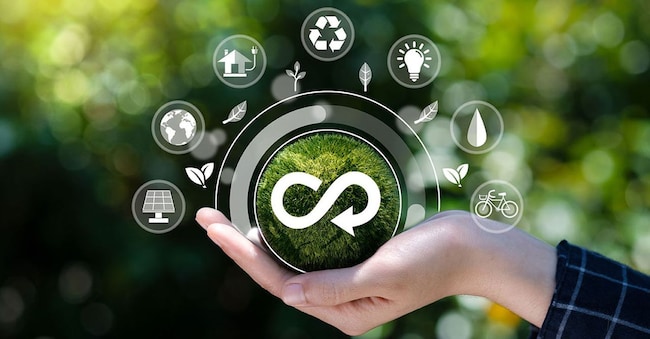
Hand hold the circular economy icon. The concept of eternity, endless and unlimited, circular economy for future growth of business and environment sustainable

3' min read

Translated by AI
Versione italiana

3' min read

Translated by AI
Versione italiana

Forward in the circular economy and in slow gear in the energy transition from fossil fuels to renewables. With the result that Italy slips from third to fifth place in the European picture. Photographing this situation is the report 'Circonomia 2025' edited by Duccio Bianchi of the Istituto di Ricerche Ambiente Italia and drawn up within the framework of the Festival of the Circular Economy and Ecological Transition and being presented at Ecomondo.

Ranking on 21 indicators

The ranking proposed in the Report, as stated in the document, is based on 21 indicators, divided into three categories: impact on the use of resources (per capita consumption of materials and energy, climate-changing emissions), efficiency (consumption of materials and energy, climate-changing emissions and waste production per unit of GDP), and responsiveness (recycling rates and use of secondary materials). "The indicators," emphasise the promoters, "have been normalised on a 0-1 interval and are equalised in the general index; taken together, the 21 key indicators provide a reliable snapshot of the state of circularity and ecological transition in the various countries of the European Union.

Loading...

In terms of absolute performance at the European level, for the third consecutive year, almost all indicators show an improvement, 'or at least stationarity' towards decarbonisation and circularity.

Positive circular economy

"The positive evolution that had brought Italy among the leaders in circularity and ecological transition now seems to have come to a halt," the report reads. Already in 2021 and 2022, Italy made less progress than the European average and that of other leaders in energy conversion, while maintaining good performance in the recycling and circularity indicators. This trend continued in 2023 (and all available data suggest that it will be the same in 2024 and 2025)'.

Renewables slow

Between 2023 and 2022, Italy's progress was lower than the European average in terms of energy consumption per capita and per unit of GDP, and the reduction in fossil fuel consumption was even more marked. Only a third of the European average was the growth in the share of renewables in energy consumption and it is striking that the share of electricity from solar and wind was higher in Italy in 2014 than in the European average (13.6% vs. 11.2%) while in 2024 it is much lower than the European average (21.9% vs. 28.7%).

Emissions rising in 2023

'Italy is one of the few cases in Europe where CO2 emissions (already higher than the European average) from newly registered cars will increase in 2023,' the report continues. 'Even in terms of recycling and material circularity (despite starting from very high values), Italy's trend has been in absolute terms worse than the European average. This is now a consolidated trend. 'Over the last 10 years,' the document continues, 'Italy's improvements on the various indicators has been one of the lowest in Europe.

Good for the circular economy

The positive picture, on the other hand, emerges when examining the transition from the linear economy to the circular economy, "i.e., in the indicators relating to per capita consumption and per unit of GDP of materials, the use of secondary materials, the recycling rate of total waste and urban waste, and the share of added value from the circular economy". "Here we always present one of the five best performances in Europe, ranking second overall, preceded only by the Netherlands," the report continues. "It is clear that this now consolidated Italian 'success' depends largely on the excellent results in waste collection and recycling achieved thanks to the system of supply chain Consortia, starting with the Consortia operating in the packaging sector. These include Cial (aluminium), Ricrea (steel) and Biorepack (compostable bioplastics), which have always been partners of the Circular Economy Festival. The 'new frontier' is then the recovery of WEEE (Waste Electrical and Electronic Equipment) and the precious materials contained therein, which is taken care of by the Erion Weee Consortium'.

For Francesco Ferrante, vice-president of Kyoto Club, "it is technological innovation itself that makes the efficient use of resources increasingly convenient, whether we are talking about recycling and waste recovery or the transition from fossil fuels to renewables in energy production". "What differentiates the two sectors is that in the circular economy for almost thirty years there has been sufficiently clear legislation that has promoted it," he adds, "whereas in renewables there are still too many obstacles of a non-technological nature that delay its development.

Emanuela Rosio, the Festival's organiser, supports the necessity of the ecological transition: 'The transition is necessary to prevent climate collapse, but if it is well governed and oriented, it is also an extraordinary opportunity that can enable Italy and Europe to assert economic and technological leadership in a global process that is already in full swing and is reshaping the economic world of today and tomorrow'.

Copyright reserved ©
Loading...

Brand connect

Loading...

Newsletter

Notizie e approfondimenti sugli avvenimenti politici, economici e finanziari.

Iscriviti