
Report

Italy second in Europe for transplants: 2024 record year, Bari leader for hearts

Donors up 3.6%, more than 4,600 transplants performed. Bari polyclinic beats Paris and Düsseldorf centres

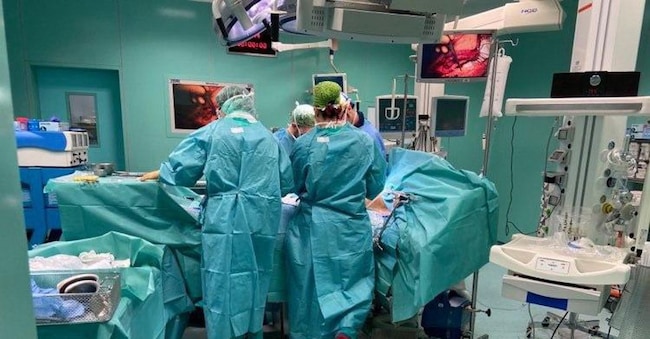
by Francesca Cerati

3' min read

Translated by AI
Versione italiana

3' min read

Translated by AI
Versione italiana

Italy is confirmed as one of the world's excellencies in the field of organ donation and transplantation. This is not only a matter of national pride, but also of the figures contained in the latest Council of Europe Transplant Newsletter and in the 2024 Annual Report of the National Transplant Centre (NTC): a record year for the Italian network, with an increase in donors and transplants and a growth in the most complex practices, such as still-heart donation.

Second in Europe for donations

With 29.5 donors used per million inhabitants, Italy ranks second among the large European countries, behind Spain (48) but ahead of France (28.3), the United Kingdom (19.2) and Germany (10.9). Extending the ranking to the entire continent, our country ranks sixth, preceded only by Portugal (33.5), the Czech Republic (32), Belgium (31.7) and Croatia (29.8).

Loading...

Numbers that place the Italian transplantology network among the most solid and capillary in the world, capable of guaranteeing quality and safety even in the most complex cases.

More than 4,600 transplants by 2024

The year 2024 was a record year: 4,642 transplants performed, an increase of 3.9% over the previous year. Of these, 179 in national emergency and 191 paediatric (79 liver, 76 kidney, 32 heart, 4 lung).

The number of donors reported in the resuscitations was 3,165 (+2.3%), while the number of donors actually used was 1,730 (+3.6%), with an average age of 62.6 years. Among the 221 hospitals involved in the national network, the following stand out: Città della Salute e della Scienza in Turin with 440 transplants; Padua Hospital with 413; Ismett in Palermo at 276.

Padua leads the ranking for kidney (217) and lung (41) transplants, Turin is first for liver (179), while the Policlinico di Bari confirms its position as Italy's leading centre for heart transplants (73). For pancreas, the record goes to San Raffaele in Milan (14).

Donation with a stopped heart: a silent revolution

Among the most significant data is that of still-heart donation, which grew by 34.6% in 2024, with 284 donations (16.4% of total donations). This is the highest increase in Europe, with the exception of Spain. This result was also made possible by the Italian regulations, which impose a 20-minute observation period for the declaration of death with cardiac criteria, as opposed to the 5-10 minutes adopted on average abroad. This is greater protection for donors and a sign of great ethical attention.

Until a few years ago, this practice was considered pioneering; today, according to the NTC, the clinical results of transplants from still-heart donors are comparable to those from brain-dead donors.

Bari beats Paris: first in Europe for heart transplants

If 2024 was a record year, 2025 brought a historic record: the Policlinico di Bari became the first European centre for number of heart transplants, with 94 operations as at 31 October, ahead of the Pitié-Salpêtrière Hospital in Paris (65) and the centres in Bad Oeynhausen, Düsseldorf and Valencia. This result rewards the cardiac surgery directed by Tomaso Bottio, who leads a young and highly specialised team. 21% of transplanted patients come from outside Apulia, attracted by faster lists and excellent clinical results: one-year survival of 73% and mortality rate on the waiting list of less than 1%.

"From last we have become the first in Europe," commented Bottio, "thanks to the dedication of a team that never stops. Every transplant is a story of a life saved." Satisfaction also came from the general director of the Policlinico, Antonio Sanguedolce, who spoke of 'a sign that the South can compete at the highest international level'.

Over 8,000 waiting for an organ

However, the number of patients on the waiting list remains high: 8,024 people at the end of 2024. The average time varies from 3 years for a kidney transplant, to 1 year and 7 months for a liver, 3 years and 4 months for a heart and 2 years and 5 months for a lung. For patients in national emergency, on the other hand, waits are drastically reduced: 2 days for a liver, 5-6 for kidney and lung, 10-11 for a heart.

"The numbers for 2024 and the first figures for 2025 confirm the strength of the Italian system," said Giuseppe Feltrin, director general of the NTC. "Our strength is the national network: a continuous collaboration between institutions, healthcare professionals, volunteers and citizens. The growth in the number of heart-stopping donations shows how the system is able to evolve in complexity and respond effectively to the needs of patients."

Copyright reserved ©
Loading...

Brand connect

Loading...

Newsletter

Notizie e approfondimenti sugli avvenimenti politici, economici e finanziari.

Iscriviti