

Chronic itching: from underestimation to personalised medicine with new blood tests
From multidisciplinary diagnosis to new targeted therapies, dermatologists focus on personalised medicine to reduce the impact on patients' quality of life, sleep and mental health

Key points
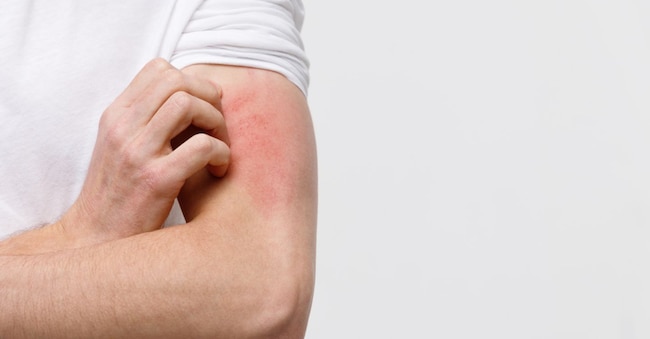
Transforming an often underestimated symptom into a clinical priority to be addressed with increasingly advanced and personalised tools. This is the leap proposed by the dermatologists Sidemast, meeting in Rome for the 99th national congress. A clinical priority, first and foremost because behind an 'itch' there could be a disease or even a psychological discomfort to be intercepted.
Moreover, even literature renders its evocative power: Dante, in the XXIX canto of the Inferno, describes the damned afflicted by scabies forced to scratch themselves incessantly, transforming the itch into a metaphor for torment.
The patient at the centre
There is no such thing as the same itch for everyone: with the same diagnosis, different patients may in fact present different biological mechanisms, conditioned by variables such as age, sex, comorbidities, concomitant therapies and genetic characteristics, and different physical and psychological consequences.
"In dermatology we are witnessing a real paradigm shift: we are no longer treating just the symptom, but the patient in his or her biological specificity,' emphasises Paolo Amerio, Full Professor of Dermatology and Venereology, Dermatological Clinic of the 'G. d'Annunzio' University of Chieti-Pescara and President of the 99th Sidemast National Congress. Precision medicine allows us to identify the mechanisms underlying itching and to intervene with increasingly targeted and effective therapies'.
The quality of life
A profound impact on quality of life. Today we know that chronic itching is not just a physical symptom. "Itching does not only affect the skin, but the person's entire emotional and relational sphere," explains Roberto Maglie of the Department of Health Science, Section of Dermatology, University of Florence. It can foster anxiety and depression in around 20% of patients, compromise sleep in 60% of cases, and generate strong psychosocial discomfort, to the point of stigmatisation and isolation, as it conjures up an idea of contagion in the collective imagination.

