Characters

Jack Welch, what remains of the tough manager who changed corporate America

Six years after his death, a reflection on the legacy of General Electric's historic CEO in modern capitalism
by Francesco Guidara*

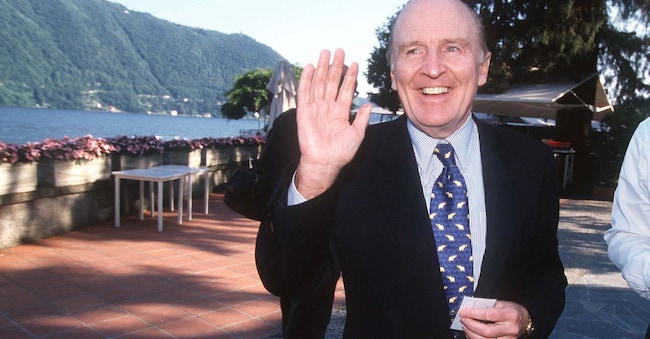
Jack Welch. (Imagoeconomica)

5' min read

Translated by AI
Versione italiana

5' min read

Translated by AI
Versione italiana

Exactly six years ago, in a world distracted and frightened by the first signs of the pandemic, died Jack Welch. A news story that slipped to the margins of attention, one that perhaps few lingered on, even afterwards, to reflect on how much capitalism does or does not owe to one of management's most celebrated icons.

There are figures who do not just lead a company, but end up rewriting the moral climate of an era. Welch is one of these. From 1981 to 2001 he was not only the CEO of General Electric: he was the most recognisable face of an American capitalism that was changing its skin, speed and ambitions. David Gelles, in his hard-hitting The Man Who Broke Capitalism (2023, Simon&Schuster), makes him the great culprit of a historical mutation: less industry, less patience, less community; more finance, more obsession with stock market value.

Loading...

When Welch arrived at the top of GE, industrial America was coming out of the 1970s short of breath: inflation, Japanese competition, structural inefficiencies, bureaucratic gigantism. The great twentieth-century conglomerate was beginning to look like an ocean liner too slow for the new global seas. Welch decided that he did not want a floating fortress, but a fleet of speedboats. The metaphor was his, and it captured something precise: speed was becoming more important than size.

This vision translated into consequent choices. The best known - and most controversial - was the rule that every business had to be number one or two in its market, otherwise it had to be sold or closed. This was not a theoretical formula: it meant dismantling an industrial empire piece by piece and rebuilding it around the best performing areas. In a few years GE became leaner, faster, more profitable: a sophisticated capital allocation machine.

This is where Welch's real strategic insight comes in, and also where his legacy becomes most ambiguous: financialisation. With GE Capital, the group became a powerful hybrid of industry and finance. In the 1990s, GE Capital came to generate almost half of the profits of the entire group: loans, leasing, insurance, commercial mortgages. It was an extraordinarily profitable model as long as the markets were favourable, but built on leverage that would make the group vulnerable to any reversal of the cycle (like the one in 2008). The group that Welch had brought to a capitalisation of $400 billion began the long decline from which it never recovered.

Human Capital Management

Then there is the question of human capital. The system that Welch introduced - known as the rank and yank, or more elegantly as the vitality curve - involved the annual classification of all managers into three categories: the best 20% to be rewarded, 70% to be developed, and 10% to be eliminated. It was brutal, and Welch made no secret of it. But it was also, in its way, consistent: in a system where expectations were explicit, there was no room for duplicity. His organisations knew how to evaluate and how to be evaluated.

The problem was not so much the hardness itself, but the long-term systemic effects. That model normalised a conception of managerial work as a purely performance contract, emptied of any value or identity dimension. The mutual loyalty between company and manager - which had governed the post-war American economy - was replaced by a transactional logic in which continuity was a prize to be earned every year. When that model left GE and spread to the rest of the corporate world - starting with strategic consulting and some Silicon Valley tech companies - it brought with it all its contradictions: the acceleration of managerial turnover, the difficulty of building long-term projects, the friability of organisational cultures.

The fourth crucial point that Welch anticipated was the control of the narrative. GE's entry into the media world - up to and including its control of CNBC through its stake in NBC - was not a marginal detail. An industrial group that presides over business publishing not only controls its own results, but also the frame through which the industry's numbers are read. It is not surprising that for years that same media machine treated Welch as an oracle, likening him to the same Warren Buffett.

A model unable to evolve

As is often the case with unwieldy figures, Welch left many clones behind him. GE had been one of America's great talent factories for decades, and many of its former executives went on to lead large companies. But the problem was more subtle. Welch did not build a continuity capable of evolving the model. He trained excellent executors of already given visions, not performers capable of updating them when the context changed. Jeff Immelt found himself running an extraordinary but also deeply exposed machine in a world where the coordinates had already changed. It is not Welch's fault that Immelt was not up to the task. But it is at least partly his responsibility if the system he built did not include any toolbox to adapt.

Words like sustainability, inclusiveness, social responsibility - which today fill corporate documents and board agendas - were essentially absent from its cultural horizon. Not because they were denied, but because they did not belong to the semantic field of that capitalism.

Perhaps the most useful question today is whether the model it embodied has really waned, or whether it survives, like embers under the ashes. Today, at first glance, companies write and speak of purpose, of stakeholder capitalism, of the long term. But the actual mechanisms of performance evaluation, capital allocation, and measurement of managerial success still closely resemble those Welch defined in the 1980s.

In the past few days, in the Financial Times, Brené Brown, an American researcher who has become famous for bringing the topic of empathetic leadership and vulnerability to the management world, issued a warning: many leaders are ceasing to soften their hardest traits. It is not so much a return of ruthless leadership as 'the end of its pretence'. After years in which the lexicon of empathy was often adopted more as linguistic code than actual practice, the pendulum seems to be swinging back towards more explicit and less mediated forms of leadership.

The long shadow of Welch's style - direct, demanding, sometimes brutal - seems to resurface as a deep structure never really overcome. After all, Welch interests us not only because of what he was. We are interested because we still live in the world he helped build.

To understand him is to understand something of the contradictions that we are trying, with effort and still uncertain results, to overcome.

*International Advisory Board GSOM Politecnico di Milano

Copyright reserved ©
Loading...

Brand connect

Loading...

Newsletter

Notizie e approfondimenti sugli avvenimenti politici, economici e finanziari.

Iscriviti