
Kevin Warsh’s test in Jackson Hole: a decisive test for the Fed’s strategy
The market is seeking clarity from the Fed Chair: following the higher-than-expected rise in the PCE inflation rate, futures are pricing in a 42 per cent probability of a rate rise in September. In July, Warsh failed to clarify to the market the decision to leave rates unchanged, creating uncertainty and confusion
From New York Luca Veronese
 Aggiungi Il Sole 24 Ore
ai preferiti su Google
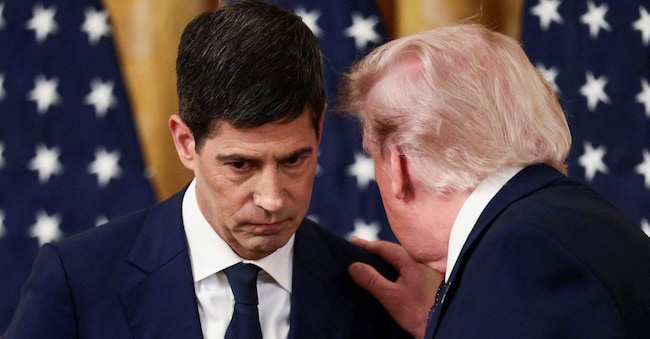
Kevin Warsh will have something to say in his first appearance at Jackson Hole tomorrow. The first challenge is inflation, which has been hovering too close to 4 per cent for months. But with the new Federal Reserve Chair appointed by Donald Trump, the credibility and independence of the US central bank are also at stake. Meanwhile, scrutiny has already begun of Warsh’s strategies and, even more so, of his external communications.
“It is clear that Warsh prefers to say too little rather than too much,” explains Anwiti Bahuguna, co-head of investments at Northern Trust Asset Management. “However, the markets’ demand for a certain degree of transparency and communication regarding the reasons behind the current stance and the assessment of the situation is legitimate,” she adds.
Market expectations
The markets are waiting to understand; they are not asking for predictions but for information – perhaps reassurances. And so far, on the contrary, it is the reticence of Warsh’s reluctance to provide answers has ended up causing a great deal of confusion. “In July, Warsh was unable – or unwilling – to explain even the decision not to adjust interest rates, despite being asked explicitly to do so. He failed to make clear what he thinks of raising interest rates as a means of curbing inflation at this stage. ‘It was baffling behaviour,’ says Robert Tetlow, a former senior adviser on monetary policy at the Fed. The bankers’ summit in Jackson Hole, Wyoming, may offer Warsh the opportunity to regain his footing on forward guidance and also in his leadership.
The inflation figures, published yesterday by the Department of Commerce, have increased – albeit only slightly – the pressure on the Fed to raise key interest rates. Following the decline in recent months, the PCE index has in fact shown an unexpected persistence of inflation: the Fed’s preferred indicator for its analyses showed a 3.7 per cent rise in personal consumption expenditure prices in July compared with the same month last year. The monthly figure also came in higher than expected, standing at 0.2 per cent in July following a 0.1 per cent fall in June. Excluding energy and food prices, the so-called core PCE remained stable at 3.3 per cent year-on-year, whilst rising to 0.2 per cent month-on-month, following 0.1 per cent in June.
Following the publication of the report, Federal funds futures indicated a probability of around 42 per cent of a rate rise at the Fed’s next meeting on 15–16 September, compared with around 36 per cent recorded immediately before the data was released. This came after the Fed voted last month – by a majority, with three of the twelve FOMC members voting against – to keep the key interest rate unchanged within the range of 3.50 per cent to 3.75 per cent.


