
Farewell to James Watson, father of the DNA double helix
The discovery of the structure of DNA 'changed biology forever', on a par with Darwin's theory of evolution and Mendel's laws of genetic inheritance.

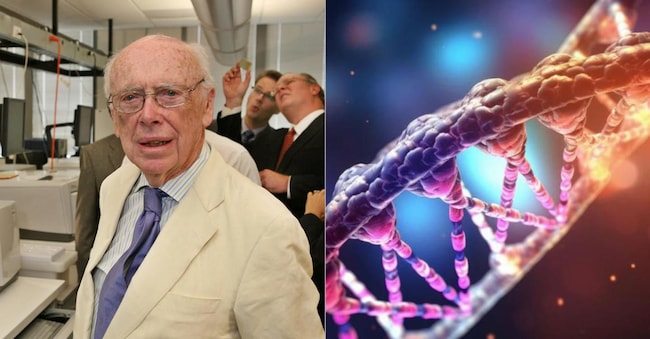
James D. Watson died in a hospice in Long Island, New York, at the age of 97. He was one of the very few scientists who could boast of having been awarded not only the Nobel Prize for medicine for his research, but also an emoji: the one depicting the DNA double helix on millions of telephones. A symbol of scientific progress, life and evolution recognised worldwide, almost a pop icon: the code of life with information on the characteristics of all living beings.
Watson was 25 years old when he took part in the discovery of the structure of DNA. The publication of the study in Nature on 25 April 1953 propelled him to worldwide fame and the Nobel Prize in Medicine in 1962, along with Francis Crick and Maurice Wilkins. "We had made the discovery of the century, that was quite clear," Watson later declared.
His autobiography, 'The Double Helix', was included by the US Library of Congress among the 88 masterpieces of American literature. For decades he was head of the Human Genome Project, engaged in mapping the entire DNA and identifying the different genes, then fell ruinously into disgrace amid accusations of impropriety towards colleagues and for a series of racist statements.
The Nobel Prize winner died in an old people's home where he had been transferred from the hospital where he was being treated for an infection. His passing was confirmed to the New York Times by his son Duncan.
In his later years Watson had said he felt abandoned by other scientists, who did not forgive him for his short temper (he had been called the Caligula of biology) and tendency to belittle the work of others and praise his own.

