
Experience, jewellery and the Middle East drive growth in the luxury industry
Moderate optimism for market recovery in 2026. But over the past three years, excessively high prices have driven away 70 million consumers, while competition from Chinese brands is increasing

It should have been the year of recovery (which was then missed), but it did not go as badly as first feared: according to the Luxury Goods Worldwide Market Study 2025 by Bain&Company, presented as part of the Altagamma Observatory, world luxury will close the current year with revenues of Euro 1,440 billion, substantially stable (-2% at current exchange rates, +0% at constant exchange rates) compared to 2024. This is thanks to the experiential segments (travel, hotels, food) of this complex and global sector, but also to the substantial stability of luxury personal goods, which, again according to estimates, will reach 358 billion euros in sales in value, 25% more than in 2019, with an average annual growth rate of 5% over the last five years.
The year 2026 will open with "moderate optimism", explains Claudia D'Arpizio, senior partner at Bain&Co. and author of the Monitor together with Federica Levato: "2025 turned out to be stable despite negative macroeconomic indices, and for 2026 we expect an increase in consumer confidence in strategic markets such as the US and China".
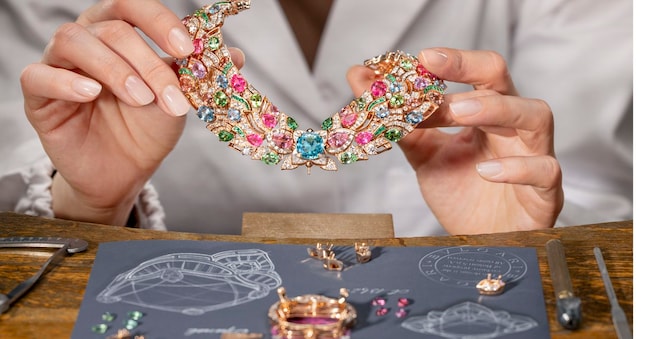
The sector showed a very fragmented performance both in terms of markets - the best being the Middle East, while Japan experienced a sharp slowdown and Europe suffered a slowdown in tourist spending - and product categories, with the highest growth rate recorded by jewellery, followed by eyewear and beauty (categories at the antipodes in terms of price).
And the challenges continue to be many: luxury goods have lost 70 million customers since 2022, returning to the audience they had in 2013, partly because they have raised prices to focus on wealthier consumers. Who, however, did not increase their spending in value between 2024 and 2025. The crisis has had an impact on profits which, according to Bain&Co., have returned to 2009 levels, with a 20% drop in two years. Moreover, competition is increasing: 'Luxury has always been a very European business,' D'Arpizio explains, 'but today in countries such as China we are seeing the emergence of local players as has already happened, for example, in the automotive industry. Competition, therefore, is intensifying. That's not all: stocks have increased and the outlet is the best performing of all distribution channels.
The Altagamma Consensus 2026 also photographs a moment of transition that, for luxury, should translate into a stabilisation of revenues and a 5% growth in ebitda. Thanks to the contribution of dynamic markets such as the Middle East (the 2026 estimate is +6%) but also of consumers who represent a pillar for Italian and world luxury, such as Americans (the market will rise by 4.5%; consumer purchases in the stars and stripes by 5.5%). The Consensus - based on the estimates of 19 analysts - sees jewellery as the segment that will grow the most in 2026 (+5%), followed by clothing, leather goods and cosmetics (+4%) . Among distribution channels, on the other hand, the retail physical (+5%) will shine, followed by digital (+4%) in an increasingly indispensable and proven synergy.

