
Jody Brugola, so we took back our story (and the whole company)
The president of the company that invented the most famous vine, the third generation of the family, explains the share buy-back and raises the future
by Lello Naso
5' min read
Key points
- The parentheses of shareholders and investment funds
- The revolution of the last ten years
- Towards 200 million turnover
5' min read
"It has always been my father's wish to have a family business only. From the day we sold the shares, we have had it in our heads to take back our history. It's not a question of closed-mindedness. We have no prejudices towards funds, the stock exchange or share ownership. The opening of capital is a tool we have used when the need arose. In 2015, for example, when we decided to build the American plant, we opened the capital to the Italian Investment Fund. But as soon as the conditions were created to regain ownership of one hundred per cent of the shares, we did so'. As a matter of sentiment, but also of strategy. A mix of heart and reason.
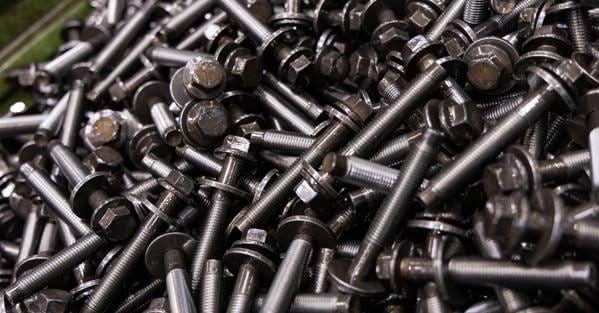
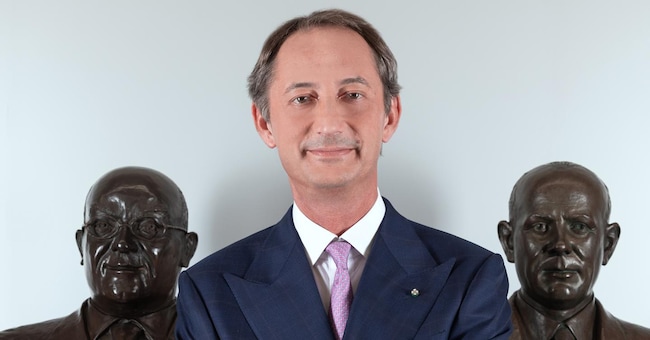
Jody Brugola, 44 years old, president of Brugola OEB (Officine Egidio Brugola) recounts the decision to take back 100 per cent of the company, which matured a month ago, as a matter of course. Something that could not fail to happen. Jody is the third generation of one of the most crystalline representatives of Italian family capitalism. He is the grandson of the Egidio Brugola who founded the company in 1926 and appears in the company name. Jody, moreover, is named Egidio after his grandfather, the inventor and patentee of the brugola (1946), the 'hexagonal hollow screw with a twisted shank', as the Treccani defines it, to which he gave his name. Allen screw, for everyone Allen. A product that has become a common name like, for example, Barbie and Scotch, ATM and k-way, scottex and bostik, jeep and crodino, talcum powder. The excellence of world production and commerce turned on its head by widespread use. It was unthinkable that the Allen screw, which the Brianza-based company no longer produces, would not return completely to the family that created it.
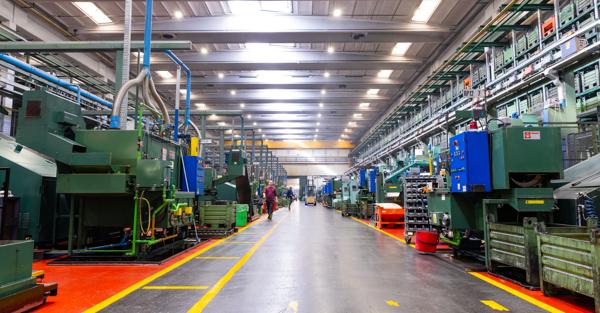
The trajectories of companies, as we know, are never linear, but remain recognisable over time. With a soul and a DNA. After the First World War, in 1926, Egidio Brugola founded the company in Lissone, Brianza, to produce washers and rings for engines. "The first phase of the company, that of Egidio," says Jody, "gave the company its soul, the philosophy that has remained to this day. Research, top quality, specificity and characterisation of the products. From diversification came the idea of the Allen screw'. The second phase, led since 1964 by Giannantonio, Jody's father, is that of growth. These are the years of the economic boom. "It's the critical mass phase," explains Jody. "The range and production are expanded, exports grow, especially to Europe. The foundations are laid for the company to become crucial in the automotive sector. The concepts of total quality and zero defect are launched, children of Egidio's research philosophy'. Brugola became the sole supplier of Volkswagen, then of Ford's I4 engine, one of the most popular in the world. The critical engine screws, seven of them, are often those of the Lissone-based company.
The parenthesis of shareholders and investment funds
.In 1990, also to finance development abroad, came the establishment of Abf, the company with the Agrati and Fontana groups, which took a 30% stake in Brugola. In 2015, again for the same purpose, the Italian Investment Fund entered the capital by subscribing to a reserved increase for the construction of the American plant in Detroit. This marked the beginning of the Jody era, chairman since 2015.
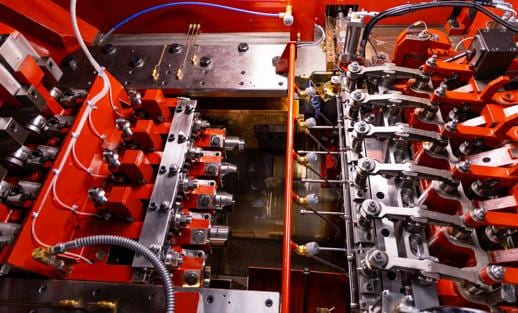
Jody is responsible for perhaps the most complicated phase of the company. There are the external partners, the Italian Investment Fund and Abf (with Agrati and Fontana). There is the long wave of the automotive crisis, daughter of the 2008-2009 financial crisis. There is the development and internationalisation needed to survive. There is the reorganisation of production and plants. There is also the cumbersome legacy of a grandfather and father who had made the company's history. "I was aware from the beginning," says Jody, "that the work to be done was very demanding. I felt the responsibility, but never the weight of history. As a young man I had been behind the scenes a lot and had worked on all the files, I was prepared. There was a lot to do and that, paradoxically, was an advantage. Starting from a difficult situation, the first that the company was going through in history, could create less resistance to change. And so it did'.


