Energy

Jorgensen (EU): Heating at risk for 50 million Europeans; further measures under consideration

The EU Council is considering the adoption of measures relating to network charges, infrastructure and the acceleration of electrification.

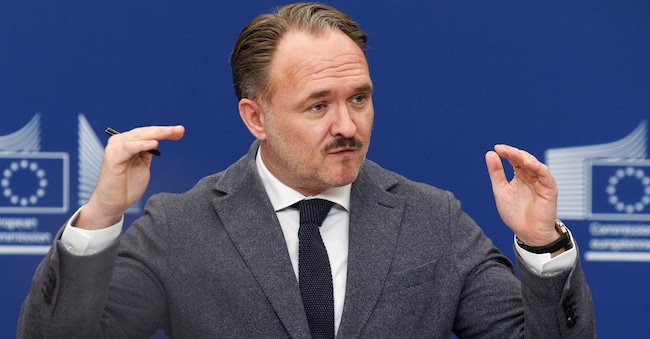
epa13336426 Il commissario europeo per l’Energia e l’Edilizia abitativa, Dan Jorgensen, partecipa a una conferenza stampa al termine del Dialogo di alto livello sulle raffinerie dell’UE a Bruxelles, in Belgio, il 28 ottobre 2026.  EPA

3' min read

Translated by AI
Versione italiana

3' min read

Translated by AI
Versione italiana

Next winter will be “tough” for many European citizens, over 50 million of whom will be unable to “heat their homes adequately”. This is the prediction made by Dan Jorgensen, the European Commissioner for Energy and Housing, speaking in Luxembourg on the sidelines of the EU Council.

Winter, he says, “will be difficult for many European citizens; we are well aware of this. In any given year, unfortunately, nearly 50 million Europeans are unable to heat their homes adequately due to high energy prices in Europe.”

Loading...

"This year, the figure is likely to be even higher; we must therefore do everything we can to alleviate these difficulties."

“My message to Member States is very clear,” he continues, “do everything in your power to phase out fossil fuels as quickly as possible. This means focusing more on renewable energy and energy efficiency, promoting electrification by replacing gas or oil-fired boilers with electric heat pumps, and switching from combustion-engine vehicles to electric ones. These are all measures that can be supported and which, even in the short term, are capable of making a tangible difference,” he concludes.

Jorgensen: the worst crisis since 2022, but we are better prepared

“We are in a better position to tackle this crisis than we were in 2022, as we have reduced our gas consumption: we now use 18 per cent less. Furthermore, we have diversified our supply sources. In the past, we sourced 45 per cent of our gas from Russia; a situation that left us extremely vulnerable.

“Now, however, we source our supplies from various suppliers around the world. Of course, the situation has changed, but on the other hand this crisis is more serious, as it also affects oil and petroleum products,” added Jorgensen.

“Last summer,” he emphasises, “we identified risks to the security of aircraft fuel supplies. At present, we are not facing a similar situation and do not foresee a crisis relating to the security of supply; however, a key point I shall be raising with the ministers today is that, whilst this is not a supply crisis in the strict sense, for citizens in difficulty – who cannot afford petrol for their cars or heating for their homes – the availability of the product is irrelevant if they do not have the means to buy it. The same applies to our businesses, which are under severe pressure; we must therefore take this matter very seriously. I am confident that the ministers will agree with me on this point, and it is precisely for this reason that we must discuss further measures to alleviate this serious situation.”

‘Further measures under consideration’

The European Union is “in a better position to tackle this energy crisis” than it was “in 2022, because we have reduced our gas consumption, but this crisis is also more serious, as it also affects oil and petroleum products”. Jorgensen gave assurances that the EU “does not foresee a supply crisis” for fuel at present, but “for citizens who cannot afford to buy petrol for their cars or to heat their homes”, it feels as though there is one.

The Commissioner concluded by emphasising the need to “discuss further measures on what can actually be done to alleviate this serious situation”.

‘No magic wand: Europe is seeking solutions’

In an energy crisis such as the one Europe is currently facing, “it is important to be clear: neither the EU nor the Member States have a magic wand to make price rises disappear”. This was stated by the Irish Minister for Energy, Darragh O’Brien, on the sidelines of the EU Council meeting in Luxembourg. Ireland currently holds the rotating presidency of the Union.

Loading...
Falcone "L'Ue intervenga con misure strutturali per far fronte alla crisi"

O’Brien points out that Member States “have taken action on taxation and through short-term energy support measures, such as reducing excise duties on diesel and petrol. Take, for example, the road haulage sector. The aim today is to understand how to move beyond these measures, by focusing on more sustainable solutions. This is why networks and the associated network charges are of crucial importance, and this is why we want to promote their development during our presidency”.

According to the minister, “there is no time to lose: we are facing a very serious energy crisis which threatens the Union’s competitiveness and requires appropriate action. I look forward to discussing this with Commissioner Dan Jorgensen, whom I shall be meeting this morning and who will also address the Council, to assess the adoption of further measures. “We must do everything possible to address grid charges, infrastructure and the acceleration of electrification, to secure our future,” he concludes.

Copyright reserved ©
Loading...

Brand connect

Loading...

Newsletter

Notizie e approfondimenti sugli avvenimenti politici, economici e finanziari.

Iscriviti