
JPMorgan CEO Jamie Dimon: risk of economic crisis and AI-related credit turmoil
Dimon expresses fears for the US economy, highlighting risks in asset prices and the private credit sector, with possible IA-related repercussions

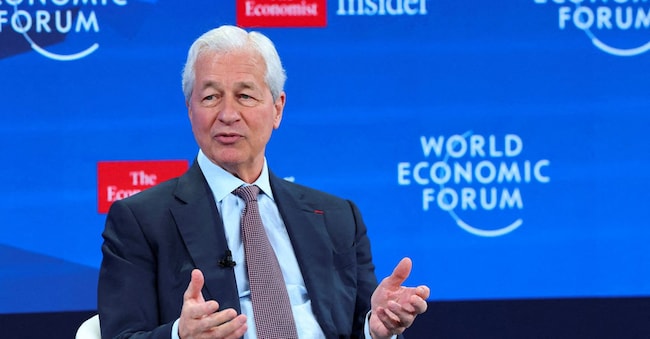
JPMorgan CEO Jamie Dimon said he was concerned about the US economy, citing a competitive environment in the banking sector that reminded him of the years before the 2008 crisis.
Although economists decry the Trump administration's tax and deregulation policies as a factor that will boost economic growth this year, Dimon said during an annual update for investors that his tendency is to consider what could go wrong when expectations are high.
"My view is that people are getting a little calmed down that these high asset prices and high volumes are real and that we won't have any problems," said Dimon, who was dressed in black and wearing a brace on one hand.
Dimon 'anxious' about systemic risks
Inevitably, Dimon said, the business cycle will change direction. "One day there will be a cycle.... I don't know what confluence of events will cause that cycle. I'm very anxious about that," Dimon said. "I'm not comforted by the fact that asset prices are high. In fact, I think that increases the risk."
While fears about how Anthropic and OpenAI's artificial intelligence models could revolutionise a myriad of industries, particularly software companies, have rattled the markets in recent weeks, the broader S&P 500 index is not far from its all-time high level.
Doubts about the resilience of the credit sector
At the same time, concerns about lending to software companies, at the centre of concerns about artificial intelligence, hit private lenders hard after Blue Owl spooked the markets last week by announcing it had to sell assets to satisfy investors clamouring to get out of one of its funds.

