
World Day

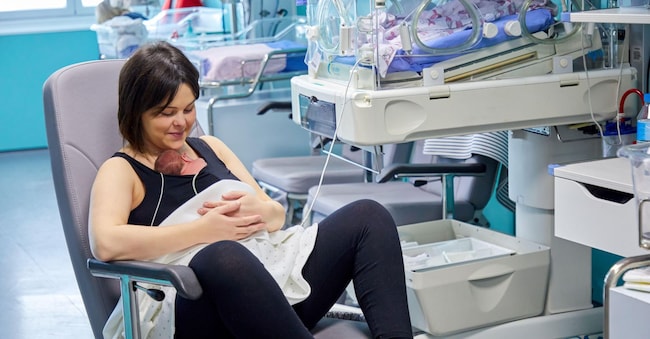
Kangaroo Care: the embrace that heals and grows healthy not only babies born prematurely

The World Health Organisation recommends 'hugging that cures' as a routine for all pre-term or low birth weight infants but is also looking at its application to babies born at term

by Massimo Agosti *
(Alamy Stock Photo)

3' min read

3' min read

Kangaroo Care is currently considered one of the best interventions in terms of effectiveness and cost to promote the wellbeing of preterm infants because of its many benefits. It can reduce neonatal mortality, increase breastfeeding rates, and improve weight growth and other anthropometric parameters.

The World Health Organisation (WHO) recommends Kangaroo Care as routine care for all preterm or low-birth-weight infants, indicating that it should be started as early as possible and should last for eight or more hours a day, with sessions of at least two hours.

Loading...

Recent studies

.

Very recently, new studies have been published on the neuroprotective value of this care. The amount of Kangaroo Care during hospitalisation correlates significantly with better scores on neurodevelopmental scales at 12 months. Several mechanisms may be at play to explain the observed relationships between KC skin-to-skin contact and improved neurodevelopment: stress reduction and autonomic regulation, improved bonding between infants and parents during hospitalisation that facilitates bonding, attention and learning later in infancy. Finally, by providing positive neuronal stimulation, it can directly contribute to brain maturation and neurocognitive abilities.

It is truly 'a hug that heals', as also highlighted by this year's World Kangaroo Care Day slogan on 15 May entitled 'In my arms, grow up', with the aim of protecting and nurturing every child through the power of touch and the recognition of the profound impact of Kangaroo Care in promoting healing, stability and well-being throughout the life of the newborn.

Anti-stress response

.

Preterm birth and stay in the neonatal intensive care unit (NICU) are a source of stress and worry for parents, and kangaroo therapy is one of the most suitable approaches to reduce the stress of mothers and newborns. Recent studies have shown that it increases the resilience of mothers and this positive effect is also confirmed with respect to promotion at home and on all family members.

There is also an effect on the incidence of neonatal infections due to increased production of breast milk, reduced incidence of hypothermia, more time spent in care by the mother and earlier discharge from hospital. There is also recent evidence that the practice of KC allows the transfer of a favourable microbiome from mother to baby, reducing colonisation with pathogenic bacteria.

As the Neonatal Care Study Group of the Sin, with its Secretary Dr Giuseppe Paterlini, has made known, this practice positively modulates hormone levels of oxytocin and cortisol; these benefits have also recently been demonstrated in cases where the delivery was by emergency caesarean section: mothers who started Kangaroo Care early have higher oxytocin levels and lower cortisol levels than mothers who were not given this early proposal; furthermore, there is a reduction in pro-inflammatory cytokines in mothers in the KC group, which may promote better surgical wound healing.

Effectiveness at home

.

The continuation at home of the practice of the kangaroo method, begun in hospital, has been the subject of reflection and study in recent years. Several authors have shown that the encouragement to continue it in premature infants, after discharge at home, leads to better growth in weight and other anthropometric parameters. Recently, the journal AJCN published a paper showing that the promotion and support of Kangaroo Care, even after discharge, is associated with a higher daily intake of human milk in low-birth-weight infants. This appears to be more relevant in preterm infants, compared to term infants, and in infants small for gestational age, compared to those of adequate weight.

The world health community recognises a key role for Kangaroo Care for the benefits it brings to preterm infants and their parents; hence there is growing interest in studying its application to term and late preterm infants as well. So far, results indicate that Kangaroo Care may have some benefits, such as reduced neonatal bilirubin levels, reduced effects of painful practices and improved prevention of hypothermia.

Finally, in all those conditions where breastfeeding is not possible, the use of Kangaroo Care, as skin-to-skin contact, can be a valid alternative to support optimal growth and development of the baby.

* President of the Italian Society of Neonatology (Sin).

Copyright reserved ©
Loading...

Brand connect

Loading...

Newsletter

Notizie e approfondimenti sugli avvenimenti politici, economici e finanziari.

Iscriviti