Use

Kent's resignation over Iran war, a hot dissent for Trump

Head of counter-terrorism, long-time loyal supporter, controversial right-winger, his exit shows the Maga divisions between isolationists and foreign policy hawks

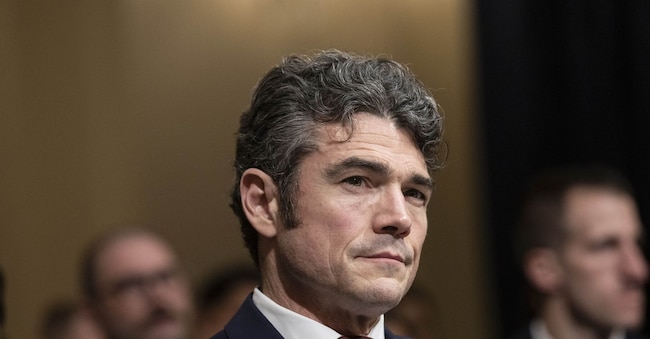
by Marco Valsania

11 dicembre 2025, Washington, USA nella foto: il direttore del National Counterterrorism Center degli Stati Uniti Joe Kent  foto IPP/Mattie Neretin/CNP via ZUMA Press warning avaiaible only for italian market   Capo del centro antiterrorismo Usa Joe Kent si dimette: “Non sostengo guerra in Iran”

4' min read

Translated by AI
Versione italiana

4' min read

Translated by AI
Versione italiana

The Trump administration has been rocked by the first heavy defection in protest against the war in Iran and its stated reasons. The director of the National Counterterrorism Centre, Joe Kent, announced his resignation and did so with a cutting j'accuse: he called it a misfortune that Tehran posed an "imminent risk to our country".

And he openly criticised what he called the Israeli government's influence on the White House in triggering the conflict, drawing accusations of anti-Semitism but bringing to the fore the rift caused by the conflict among Donald Trump's supporters.

Loading...

Trump's response was not long in coming, downplaying the controversy. He said of Kent that he is "a good man but weak on security. It's good that he's gone, he argued that Iran is not a threat'.

The president, then expressing wartime optimism despite the growing unknowns about the outcome of Operation Epic Fury, went on to say that he did not fear a new Vietnam in the Middle East and indeed saw a close end to the conflict: 'I am not afraid of anything. We are not ready to leave yet, but we will leave in the near future'.

White House spokeswoman Karoline Leavitt added that Kent's resignation letter contains "many falsehoods". She continued, "President Trump has compelling evidence that Iran was about to attack the United States. The president would never make a decision to deploy military assets against foreign adversaries in a vacuum."

No evidence has actually been provided by the White House so far on attacks prepared by Tehran against the US.

Rather, the administration itself speculated that Iran would retaliate against US interests in the event of initial Israeli attacks. Nor is the status of Iran's nuclear programme, already bombed last year, clear.

If the war is generally unpopular with the American public, Kent's sudden controversial exit has highlighted another, potentially consequential crisis for Trump: the one that has erupted within the president's conservative and Maga movement, between the more isolationist currents and foreign policy hawks.

Trump has seemed to analysts to espouse with Secretary of State Marco Rubio a foreign policy with interventionist and imperial ambitions, built on revised neocon strategies, i.e. purged of grand transformative ideas and dedicated instead to maintaining existing regimes as long as they are acquiescent to White House demands.

The Iranian mission appears to be the riskiest test of the new policy, with which Kent, a long-standing supporter of Trump and his promised foreign disengagements, as well as close to the radical right - including the Proud Boys - and conspiracy theorists, propagating denialist theses about the 6 January assault on Congress, has now broken with.

"I cannot in good conscience support the current war," the senior official of the national security apparatus wrote on social media. Iran posed no imminent threat to our nation and it is clear that we started this war because of pressure from Israel and its powerful American lobby.

Kent spoke of a 'disinformation campaign' by senior Israeli officials and in the media that would undermine 'the platform of America First and sow pro-war views to encourage a conflict with Iran'.

At 45 years of age, Kent, despite his controversy, has a respectable past in Republican circles: a former congressional candidate and former CIA agent, he is also a veteran of special forces and the Iraq war. And he cites that very conflict to voice his dissent. "As a veteran sent 11 times into combat and a husband who lost his beloved wife Shannon.... I cannot support sending our next generation to fight and die in a war that has no benefit to the American people, nor does it justify a cost paid in American lives."

His wife was an expert cryptologist (sensitive data protection, ndr)military, killed in Syria in 2019 by a suicide bomber, a death that Kent attributed to the government apparatus' resistance to withdrawing soldiers as was then planned by Trump, in his first presidential term.

In the administration today Kent was a close advisor to Tulsi Gabbard, the national intelligence director, herself a proponent of a less aggressive foreign policy. Other sceptics of intervention on the international stage are not lacking and include Vice President JD Vance, 'less enthusiastic' about the attack on Iran by Trump's own admission.

For the Democratic opposition, Kent's break became an opportunity not to support him but to attack the war and Trump's stated motives more forcefully.

Senator Mark Warner, a senior member of the Intelligence Committee, summarised the position as follows:

"Joe Kent's past is deeply disturbing and, in my opinion, he should never have been confirmed to lead the National Counter-Terrorism Centre. I strongly disagree with many of the positions he has held over the years, first and foremost the one that risks politicising intelligence.

But on this point he is right: there is no credible evidence of a threat from Iran to justify the decision to plunge the US into a new war by choice in the Middle East.

Ignoring facts to pursue a predetermined conflict puts American lives at risk and threatens our national security. The United States cannot be led into a conflict based on political motives, impulses, or a president's desire for confrontation. We already know where this path leads.

Trump, in defending the correctness of his war decision, has for his part once again turned his sights primarily on his NATO allies, denouncing their lack of support for the war.

"We had no support from NATO," which had "let him down" andmade a "very foolish mistake". However, he added: 'We have had such military success that we neither need nor want their assistance, nor that of Japan, Australia or South Korea'.

Copyright reserved ©
Loading...

Brand connect

Loading...

Newsletter

Notizie e approfondimenti sugli avvenimenti politici, economici e finanziari.

Iscriviti