

Kenya and Tanzania: the energy showdown between refineries and the new ‘Egyptian’ dam
Nairobi and Dodoma are working on two multi-billion energy projects
from our correspondent Alberto Magnani
 Aggiungi Il Sole 24 Ore
ai preferiti su Google
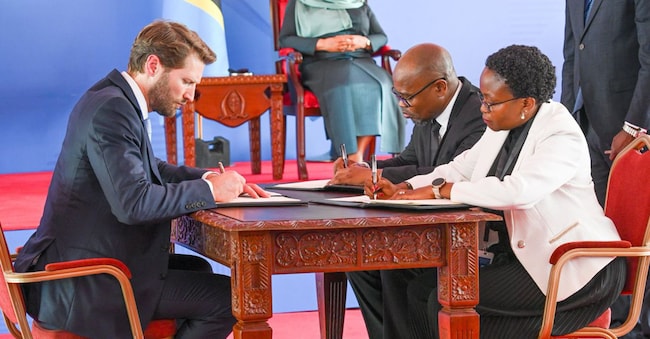
NAIROBI – Nigerian billionaire Aliko Dangote favours a pragmatic approach to diplomatic and financial relations. Especially when the two overlap. His group announced in recent days its intention to sell a 30 per cent stake in the mega-refinery due to be built in Lamu to the governments of East Africa – a $17 billion facility that is (almost) identical to the one due to come on stream in Lagos in 2024. The governments of Rwanda and Kenya are already set to secure a stake, becoming co-shareholders in the facility. Relations are not always so straightforward.
Before and during Dangote’s latest bid, the refinery became the casus belli of a conflict between Kenya and Tanzania that was as indirect as it was evident: the launch of two refineries and energy hubs on their respective coasts, with similar investments in terms of scale and medium-term objectives. LThe latest chapter in a rivalry dating back to the years of decolonisation, which has just found a new outlet in the race to become the region’s hub of choice in East Africa.
The battle between refineries
Kenya can look forward to ‘its own’ refinery in Lamu: a colossal project expected to cost $17 billion and process 700,000 barrels per day – a prospect praised by William Ruto’s government but contested by local organisations and activists due to the environmental disaster anticipated on this jewel of the Swahili coast. Tanzania responded in early August with a plan that appears to be in direct competition with Lamu’s ambitions: a memorandum of understanding signed with the Ugandan government and the energy trading giant Vitol Barhain for an even more ambitious project. The Tanzanian-Ugandan project centres on a $20 billion hub at the port of Tanga, forming part of a supply chain that includes refining, storage, logistics and distribution in East Africa itself – the very region that forms the backdrop to the rival Lamu plant.
The timing of the announcement could already be seen as a response to Kenya’s accelerated efforts. This becomes even more apparent when one considers the background to the Tanga project itself, the subject and cradle of the dispute that led to Tanzania’s counter-announcement. Originally, the Dangote refinery was due to be built in the Tanzanian port of Tanga, which Uganda, Kenya and Tanzania had earmarked as a regional hub: a further development building on initiatives already underway on both sides of the divide, such as the East African Crude Oil Pipeline and the Lappset – respectively, an oil pipeline stretching over 1,400 kilometres between the Ugandan oil fields and the port of Tanga, and a logistics and energy infrastructure linking Lamu, Ethiopia and South Sudan, which sits on a basin containing an estimated 3.5 billion barrels of oil reserves.
The convergence was shattered by a diplomatic row, which erupted when Ruto himself announced the choice of Tanga, thereby angering the Tanzanian leader Samia Hussan over the failure to consult her regarding her country’s territory. The diplomatic chill deepened even further after the Dangote Group’s choice shifted from Tanga to Lamu, effectively signalling Kenya’s overtaking of the race and sparing Ruto himself from controversy over the ‘preferential’ stance he was accused of adopting by choosing Tanga at the expense of Kenyan ports such as Mombasa (which was subsequently overtaken by Lamu anyway).


