
Defending biodiversity? Shared research is the key
The budget of the Nbfc, the Italian Centre financed with NRP funds that focuses on young people

4' min read
4' min read
'Sharing'. This is the recurring mantra that resounds in the Aula Magna of the Bicocca University in Milan at the National Biodiversity Forum. The undisputed protagonist is the Nbfc, the National Centre created in September 2022, promoted by the CNR and financed with Pnrr funds with a 320 million endowment, dedicated precisely to the protection and restoration of nature. "Biodiversity," says scientific director Massimo Labra, "represents one of the most precious resources for our country, and in this context the scientific research that our Centre promotes is fundamental: it makes it possible to monitor the state of conservation of biodiversity and the quality of habitats, and is inspired by nature to generate new products and processes. But in order to transform biodiversity into concrete innovation for companies and lasting value for society, the sharing of scientific data is essential'. He is echoed by Innovation Director Alberto Di Minin: "Biodiversity can be a competitive lever for companies, transforming them into true champions compared to their competitors: it opens up new markets, meets the needs of more demanding consumers, and anticipates the development of new products and services.
And if three years ago respect for the environment and biodiversity were included in the Italian Constitution (with the amendment of Article 9), the EU regulation on nature restoration imposes a series of binding objectives that each country must respect. Two above all: to implement effective restoration measures for at least 20% of terrestrial (forests, grasslands, wetlands, lakes) and marine ecosystems in a bad state by 2030 in order to reach total restoration by 2050.
National biodiversity future centre numbers
.In recent years, the Centre is not only producing and sharing new knowledge but also training a new generation of female scientists. There are almost 800 young people recruited, the majority of whom are women (57%), working together with more than 1,500 lecturers, researchers and companies to monitor and enhance biodiversity, as the second annual report just released shows. The Nbfc has so far produced more than 2,000 joint scientific publications, reports and more than one hundred device prototypes, concrete products for the protection of biodiversity. It has also promoted the creation of the first national biodiversity doctorate involving 25 institutions and companies and provided 56 scholarships in the 2024/2025 academic year.
The areas of action
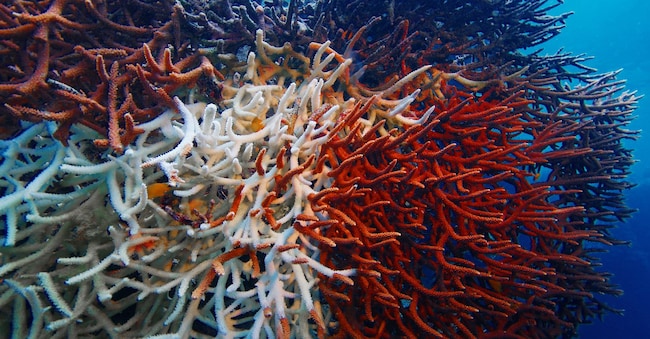
.Within the scope of the Nbfc is marine restoration. Today, there are only 14.5 per cent protected areas in Italy and the pace must be quickened to meet the objectives of the EU regulation. On the other hand, preserving the biodiversity of the seas proves to be a worthwhile endeavour, as shown by an international study led by the Centre's researchers: they analysed the results of 764 marine ecosystem restoration actions worldwide and concluded that these actions are highly successful in over 64% of cases. Restoration activities are carried out through Nbfc's Mares (Marine ecosystem restoration) project with suitability analyses to identify suitable sites, effectiveness testing of innovative solutions and performance monitoring. To date, some 20 species have been targeted at 12 different sites and seven habitats.
Another challenge is the restoration of terrestrial biodiversity. Currently," the report says, "Italy protects 21.4% of its territory, which is lower than the EU average of 26.4%. The network of protected areas (over 4,000) is also highly fragmented: 24% of them are less than one square kilometre and only 2% exceed 1,000 square kilometres. According to the Nbfc, this is still not enough to promote effective habitat conservation. This is precisely why one of the Centre's actions is to analyse the size and type of protection, which is crucial for then taking action.


