
Kia Seltos: here’s what the versatile new mid-size SUV looks like, how it drives and how much it costs
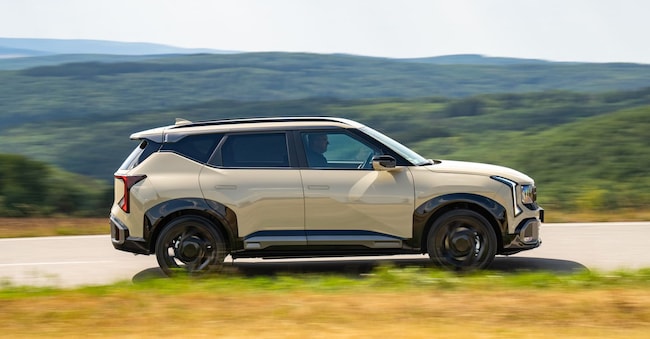
The South Korean manufacturer is expanding its range of petrol and full-hybrid models in one fell swoop with the two versions of the Seltos, which are also available with all-wheel drive. The exterior and interior design, features and technologies of the new SUV are in line with those of all the latest Kia models

Key points
The revamp of the Kia range takes another step forward with the European launch of the second-generation Seltos SUV, coinciding with the launch of the refreshed Niro and XCeed – models of similar size but with very different personalities. Like its two sister models, the Seltos reinforces the brand’s multi-energy strategy, which is one of the cornerstones of its road map, alongside the constant refinement of its design language and the upgrading of its technologies: from ADAS to digitalisation. The new SUV is positioned in the mid-size segment, competing, for example, with the Nissan Qashqai, the Renault Symbioz, the Toyota Corolla Cross – and the Volkswagen T-Roc.
Kia Seltos: powertrain and technologies
The range comprises two versions – a pure petrol model and a full hybrid – both of which are available with either front-wheel drive or four-wheel drive, an option that may prove appealing in certain regions, bolstering the Seltos’s ambitions.
Based on the K3 architecture, specifically designed for models featuring engines with pistons that are electrified in various ways, the Seltos is available in the 1.6 T-GDi and 1.6 GDi HEV variants. The former is powered by a 1.6-litre turbocharged petrol engine producing 180 cavalli and 270 Nm of torque, which is paired with either a six-speed manual gearbox or a seven-speed dual-clutch gearbox in the two-wheel-drive variant, and only with the latterin the all-wheel-drive version. The performance of these Seltos models is only slightly affected by the type of gearbox and drive system. This translates to top speeds in the region of 200 per hour and 0–100 hourly acceleration times of 9 seconds, alongside average fuel consumption ranging from 6.6 to 7.5 l/100 km depending on the configuration.
Meanwhile, the full-hybrid HEV due to arrive this autumn will also be available in a Tri-Fuel LPG version; however, the model that is already available to order delivers 154 cavalli in the front-wheel-drive version and 178 cavalli in the all-wheel-drive variant. Unlike the Seltos T-GDi, the all-wheel-drive version does not use a mechanical system but is powered by an electric motor on the rear axle. Regardless, both are fitted with a six-speed dual-clutch gearbox and can reach speeds of just under 160 per hour, accelerating to 100 per hour in around 10 seconds, whilst average fuel consumption, together with

