An interview from across the Adriatic

Kordić: “In Montenegro, tourism accounts for a third of GDP and is growing by 10 per cent a year”

Simonida Kordić, Minister for Tourism in Podgorica, outlines strategies to prevent overtourism, manage luxury accommodation and ensure integration with local traditions. Fewer and fewer people are choosing to spend their entire holiday in a single destination, and we “have launched the Bridging Destinations initiative together with Italia, Greece, Bulgaria, Croatia, Serbia, Albania, Bosnia and Herzegovina and North Macedonia” to offer cross-border holiday packages.

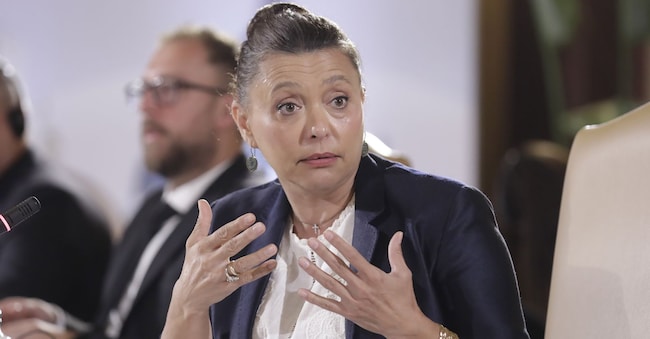
Simonida Kordić, ministro montenegrino del Turismo (Imagoeconomica)

6' min read

Translated by AI
Versione italiana

6' min read

Translated by AI
Versione italiana

“In recent years we have seen considerable growth, which is not a one-off but reflects an established trend. Both the number of tourists and the number of overnight stays are rising steadily. Since the start of the year, we have welcomed around 2.2 million visitors, representing a 10 per cent increase compared with the same period last year,” explains Montenegro’s Minister for Tourism, Simonida Kordić. Overall, during the same reference period, the Balkan country’s tourism industry recorded 13 million overnight stays, an increase of almost 10 per cent. Revenue has also followed this trend, showing a steady rise compared with previous years. “If we compare these results with those of 2019,” Kordić adds, “a benchmark year for global tourism, revenue has grown by around 80 per cent. This is a significant achievement for us.”

Minister, what is the sector’s contribution to the country’s GDP?

Loading...

“Tourism is Montenegro’s main economic sector. It accounts for 30 per cent of our GDP, thus representing a third of the national economy’s total income. In terms of exports, too, it accounts for over 50 per cent of the total. It is therefore a vital industry, which we regard as strategic. This is not a common approach internationally: relatively few countries accord tourism the status of a strategic sector. Montenegro, however, regards it as such.”

What are the fundamental drivers of growth?

‘Tourism is the result of a comprehensive effort and involves virtually every aspect of economic and social life. It also concerns infrastructure, cultural heritage, gastronomy and the quality of relationships between people. Our aim is to manage all these elements, creating the conditions for balanced growth and a constant improvement in the quality of what we offer. This means investing in facilities and accommodation, but also attracting recognised and reliable international brands, such as Regent, One&Only, Aman, Mövenpick, Swissôtel, Hilton and Hyatt. The presence of these operators conveys a message of stability and quality. Montenegro’s position on the international political stage also counts. We are close to joining the European Union, and this strengthens our position on the international tourism scene. Furthermore, this year we were named the best European destination by the European Commission for Tourism, based on visitor reviews, in which travellers rated their experience in the country. Since last year, I have also held the chairmanship of the UN World Tourism Organisation’s Regional Commission for Europe. This role has raised Montenegro’s profile and provides us with a platform to play a direct part in shaping international tourism policies.”

Beyond visibility, what tangible legacy do you intend to leave at the end of your term of office? And how does the ‘Bridging Destinations’ initiative, which aims to connect European and Asian markets, benefit Montenegro?

‘This initiative stems from an observation of the changes currently taking place and the trends emerging directly from the market. Tourism today is very different from what it was twenty or thirty years ago. Travellers’ habits, expectations and behaviour have changed. Tourism has now transcended national borders: visitors want to travel around, discover more places and enjoy a variety of experiences during the same holiday. Fewer and fewer people are choosing to spend their entire holiday in a single destination. We have recognised this transformation as an opportunity for all countries involved in the sector, particularly those within the same region. That is why we have launched the ‘Bridging Destinations’ initiative together with Italia, Greece, Bulgaria, Croatia, Serbia, Albania, Bosnia and Herzegovina, and North Macedonia. We are open to expanding this collaboration further. We want to make it easier for tourists to visit several countries in the region during the same trip. Instead of competing solely with one another, we are collaborating and benefiting together from a greater ability to attract visitors, particularly from long-haul markets. A regional approach also helps to reduce promotional costs. Furthermore, as part of UN Tourism, we will be hosting the first intercontinental conference dedicated to relations between Europe and Asia in October, with the participation of ministers from European and Asian countries that are members of the organisation’s respective regional commissions. The initiative will be accompanied by an investment forum. In collaboration with UN Tourism, we are developing a significant portfolio of opportunities through the ‘Tourism Doing Business’ programme, aimed at investors, financiers, hoteliers and other international operators in the sector. The aim is to highlight Montenegro’s investment potential and to bring political institutions and businesses together, creating a space for dialogue. Among the issues to be addressed are labour shortages, training needs, the opportunities offered by long-haul markets and the need to better manage tourist flows within the European market.”

Given the issue of overtourism, at what point does the ratio of residents to tourists cease to be an economic advantage and become a source of structural vulnerability? Is there an optimal quantitative target? What is the government’s strategy?

‘We are aware of the risks associated with overtourism. We are studying the experiences of much larger tourism markets and of countries that have been grappling with these issues for some time. We want to develop quality tourism – and I use that term deliberately. Quality tourism also encompasses the luxury segment, but it is not limited to it. There is no magic number that allows us to determine when there are too many tourists. The key issue is to manage tourism as a holistic system, taking into account both the temporal and territorial dimensions. The ratio of residents to visitors represents only part of the problem and is not, on its own, sufficient to describe the situation. We are focusing our efforts on two main areas. The first is to extend the tourist season as much as possible by introducing new types of tourist attractions. The second is to encourage growth in areas of Montenegro that have so far remained relatively underdeveloped but are becoming increasingly popular. Most tourist activity is concentrated in the south of the country, along the coast. In recent years, however, we have also seen an increase in visitors to the northern regions. We are a small country, but we have five national parks, two UNESCO-protected areas and two distinct climate zones. The country’s compact size is an advantage: a visitor can go skiing in the north in the morning and, after a journey of around two hours, spend the afternoon and evening on the Adriatic coast, enjoying the Mediterranean climate.”

So high-end tourism and short-term lettings, such as Airbnb, are not necessarily two alternative markets, but can be complementary. How important is luxury tourism, and what benefits can it bring to the local economy?

Loading...

‘Encouraging investment and growth in high-quality and luxury tourism is one of our key priorities. We are already fairly well established in this market niche, but having luxury accommodation facilities is not enough. The very concept of luxury has changed profoundly compared to fifteen or twenty years ago. Of course, high-end hotels and exclusive establishments are still important today. To encourage investment in this sector, we offer incentives, including tax breaks and other support measures. Contemporary luxury, however, also means time, space and unspoilt nature. It means being able to experience an authentic culture, linked to the specific characteristics of a place. We seek to combine local culture, gastronomy, local produce and the services of local businesses with the presence of major international brands. At the same time, we encourage these operators to invest in other areas of Montenegro as well, beyond the already established destinations. We also take action through legislation and the classification criteria for accommodation facilities, so as to incentivise local businesses and promote the local culture, integrating them into the tourism industry. In this way, even people who would not normally have considered working in tourism can enter the sector and promote their own services and products through new channels. The aim is to bring together high-end international offerings with local economic and cultural resources.”

The Bay of Kotor is well known in Italia and around the world. But if a visitor were to travel to Montenegro in winter, where could they go skiing?

‘We have five ski resorts. The one closest to Podgorica is Kolašin, which is about half an hour’s drive away. Another very beautiful destination is the Durmitor massif, which is also a UNESCO World Heritage Site. Here you’ll find a small ski resort, as well as stunning glacial lakes set amidst unspoilt natural surroundings.”

Copyright reserved ©
Loading...

Brand connect

Loading...

Newsletter

Notizie e approfondimenti sugli avvenimenti politici, economici e finanziari.

Iscriviti