
Free, non-personalisable e-bike is part of corporate welfare
Company offering it to employees deducts costs but does not deduct VAT

Key points
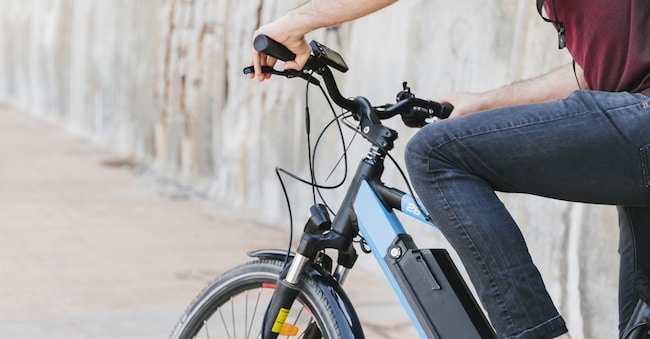
With the answer to interpello 41/2026, green mobility becomes part of company welfare: the Agenzia delle Entrate recognises the exclusion from employee income for the concession to employees of pedal-assisted bicycles (e-bikes) for mixed use, as part of a company plan that provides for a minimum use for the home-work journey. It also allows the deductibility of the related costs for the company: in full if the benefit is provided for in the company contract, agreement or regulation; within the limit of 5 per thousand of the expenses for employee work if offered voluntarily.
For VAT purposes, the non-deductibility of tax on corporate welfare costs is confirmed. This is, however, a restrictive position that does not appear to be in line with the guidelines of EU and national case law.
The position of the Revenue
The Agency considers that the use of e-bikes granted by the employer in promiscuous use to employees, with the obligation to cover at least 30% of home-work journeys (verified by the company), responds to social benefit purposes, according to Article 100, paragraph 1, of the Income Tax Code, as it promotes alternative forms of mobility to the use of combustion vehicles capable of reducing pollution and favouring the physical and mental well-being of workers. Therefore, the benefit does not contribute to the formation of employment income as it falls under the derogation to the principle of all-inclusiveness of employment income established by Article 51, paragraph 2, letter f, of the Tuir.
Of course, all the requirements of these rules must be fulfilled. First of all, the bicycle must be offered to the generality or homogenous categories ofemployees and its provision must consist of a payment in kind, with no possibility of cash reimbursement. The employee can make use of the e-bike, but must remain outside the economic relationship between the company and the leasing company that provides the means. Moreover, he or she may or may not adhere to the offer as proposed by the employer, but may not negotiate its contents, e.g. by choosing the make, model and characteristics of the bicycle, with the possible charge of the cost difference: in that case, the normal value of the benefit would be fully taxable.
It is noted, moreover, that even the entirely personal use of the e-bike should not lead to different conclusions from the mixed use. The Agency itself attributes the home-work trip to the personal sphere of the employee, since it takes place outside working hours and does not concern work. It should therefore not be necessary to use the e-bike also for business purposes: what is relevant for the purposes of income exclusion is that at least 30% of the home-work journeys are made by bike, a condition in itself sufficient to fulfil the social purpose.

