
In Florence and Tuscany among secret gardens and bucolic palaces
The esoteric Torrigiani garden

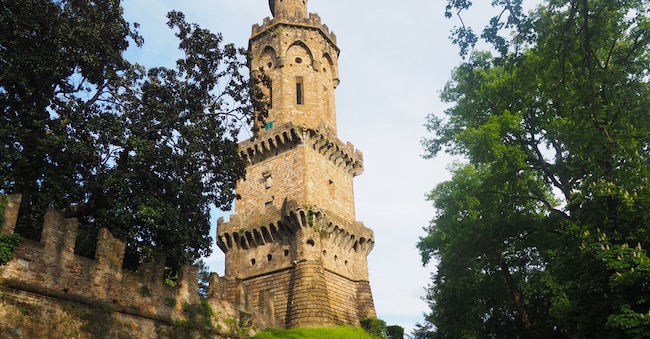
Having perhaps had breakfast at the Savoy Hotel, at Rocco Forte Hotel, in the morning, before the learned gardener Tommaso, descendant of the family with the greenest thumb in Tuscany, the welcome to the Torrigiani Garden is given by the sphinx and the goddess Osiris, perhaps the most famous manifestations of the dynastic passion for Egyptian art. This is the first indication of the absolute uniqueness of this private park within the 14th-century walls erected by architect Arnolfo di Cambio, which was acquired in the 16th century by the Medici family and has remained the prerogative of the Torrigiani lineage ever since. It was above all Pietro who decided that this secret botanical paradise, extending over seven hectares, should be cloaked in an esoteric atmosphere, so he entrusted the architect Luigi de Cambray Digny and later the engineer Gaetano Baccani, already appreciated for having designed the bell tower of Santa Croce. Well, thanks to them, one takes part in a path of asceticism of knowledge that passes through ancient ruins, small temples with an aura and Greco-Roman features. It is also surprising to find a tower-library and astronomical observatory erected above Michelangelo's bastions, while in the meanders of the motte passed the tunnels used by Cosimo I de Medici to transport his treasures. It seems that in this construction that, as it climbs, turns from quadrangular to octagonal and finally round, a telescope belonging to Galileo Galilei was also kept. It is certain that, among the writers always invited, D.H. Lawrence was the most assiduous listener of the birdsong, which he described as 'more beautiful and true than the Boboli'. If the eighteenth-century part follows the stylistic features of the romantic garden, well, among the 400 preserved species are the cedars of Lebanon, Deodora and Atlantica, the wide-armed plane trees, the sequoia, the organ pipe bamboo grove, the gentle lime trees and that Ginkgo biloba that impresses with the breadth of its trunk and the generosity of its leaves, while the branches were sacrificed to save the hunting lodge from bombs. The grotto dear to Saturn, the sculptural group by Pio Fedi that gave life to a daring Seneca clutched by a young Pietro Torregiani deserve to be discovered as well, while some of the Greenhouses have become a bistro that enjoys a separate entrance from the more intimate one of this garden within the city walls considered the largest in Europe and also the most alchemic, where the American troops pitched their tents. Inside the palace, the first fashion show in the history of Italian fashion took place in 1951, staged by Giovanni Battista Giorgini.

